


What Is Paediatric Circumcision?

Paediatric circumcision is a surgical procedure that removes the foreskin covering the glans (head) of the penis. Circumcision offers potential health benefits, but it is not medically necessary for every boy.
The potential health benefits include reduction of risks in the following conditions:
- Urinary tract infection
- Balanoposthitis (inflammation of the glans and tip of foreskin)
- Symptomatic phimosis (a foreskin that cannot retract and causes symptoms).
- Sexually transmitted infections
Circumcision may be considered for medical, religious, or personal reasons.
A consultation with a paediatric surgeon can help you understand whether treatment is needed and whether circumcision is an appropriate option for your child.
Book a Circumcision AssessmentWhen Is Circumcision Medically Indicated?
Not every child with a tight (phimosis) or non-retractable foreskin needs circumcision.
Circumcision may be offered when your child has concerns such as:
- Recurrent inflammation or infections involving the foreskin
- Pathological phimosis, where the foreskin becomes scarred or abnormally tight
- Persistent foreskin problems that have not improved with conservative treatment
- Certain urinary tract conditions associated with recurrent urinary tract infections
- Other foreskin conditions where surgery is considered clinically appropriate
What Is Phimosis in Children?
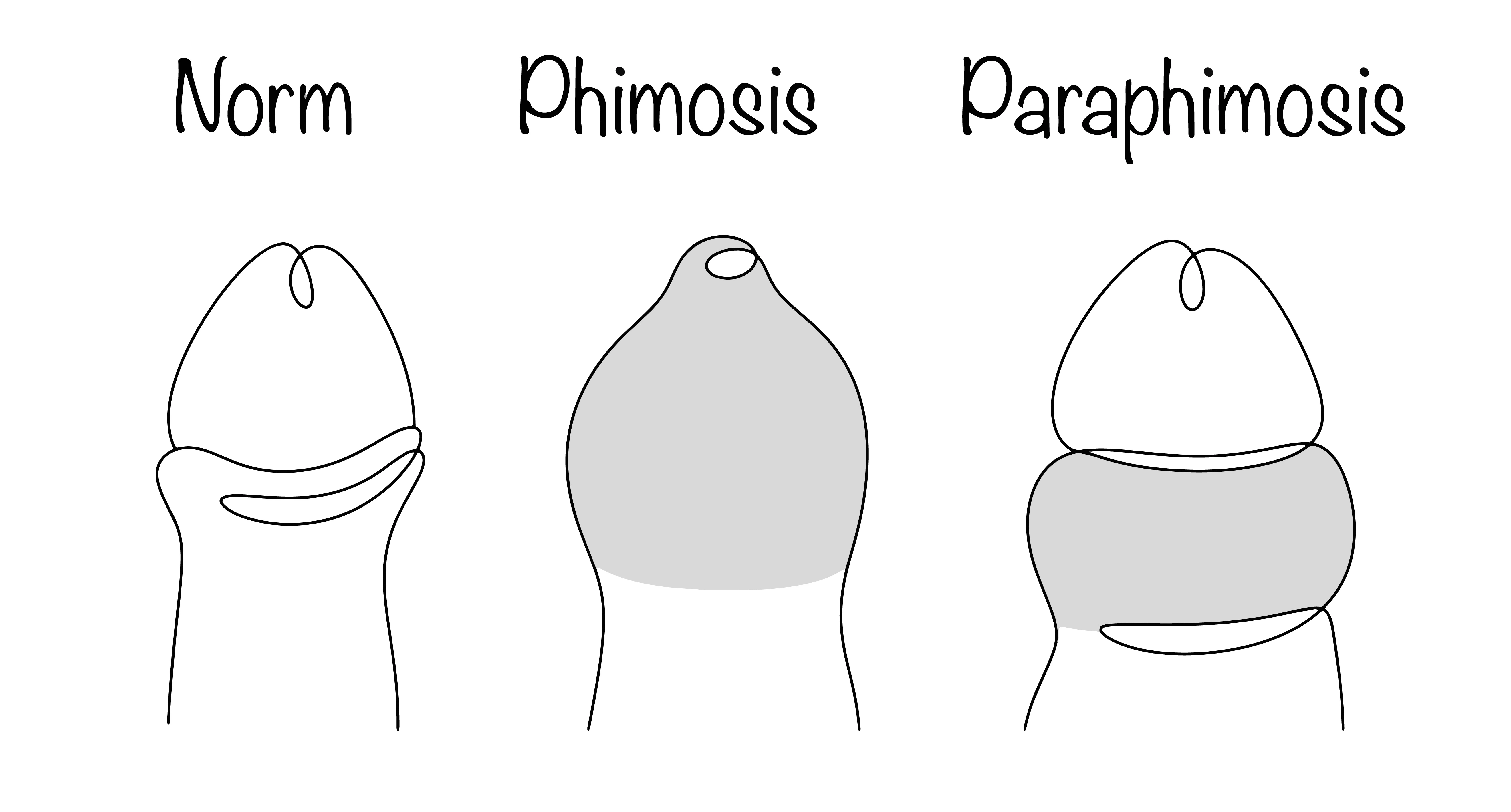
Phimosis refers to a condition in which the foreskin is too tight to retract over the glans (head) of the penis.
In infants and young boys, however, the foreskin is commonly non-retractile due to normal developmental adhesions. This is usually a normal physiological process and may not necessarily require treatment.
The foreskin should never be forcibly retracted, as this may cause pain, injury, and scarring, potentially leading to pathological phimosis.
You may want to have your child assessed if you notice:
- Recurrent redness, swelling or inflammation
- Pain or discomfort
- Scarring or increasing tightness of the foreskin
- A weak urine stream or difficulty passing urine
- Repeated foreskin or urinary tract infections
- A foreskin that was previously retractable but has become tight
Treatment depends on your child's symptoms and the cause of the problem. Some children may first be treated with topical medication and gentle stretching of the foreskin. Circumcision may be considered when conservative treatment fails.
What Are the Possible Risks?
Like any surgical procedure, circumcision has potential risks.
These may include immediate postoperative complications, such as bleeding, infection, pain, swelling, and impaired wound healing, as well as late complications, such as meatal stenosis. Additional risks may arise from the use of anaesthesia.
Recovery After Circumcision

1. Circular Clamp Circumcision in Young Infants
Instructions:
- Do not pull or tug at the ring/ circular clamp
- Bathe and diaper normally
- May apply petroleum jelly/wound gel over gland/head of penis to prevent diaper sticking onto the wound
What to expect:
- Scabbing: Yellowish coatings over the gland/head of penis. Will eventually clear up
- Slight blood stains on the wound and diaper
- Darkening of foreskin that is tied off by the string
- The ring will drop off in about 5-10 days
- Pain may be present for 1-2 days.
Contact us or visit the emergency department after clinic hours, if:
- Active bleeding
- Signs of infection: swelling, redness and worsening pain
- Ring migrates down the penis and constricts it
2. Laser Circumcision in Children
Healing generally takes approximately 1–2 weeks. Some swelling, bruising, scabbing, and tenderness around the circumcision site are expected during the early healing period. Monitor for signs of infection, such as increasing redness, worsening swelling, pus, or fever. If active bleeding occurs, seek urgent medical attention.
When Should You Consult a Paediatric Surgeon About Foreskin Issues?
Consider having your child assessed if you notice:
- Recurrent infections or inflammation around the foreskin
- Persistent pain or discomfort
- Increasing tightness of the foreskin
- Scarring
- Difficulty passing urine
- Ongoing problems with the foreskin
- Concerns about your child's genital development or hygiene
An assessment can help determine whether your child's foreskin changes are part of normal development, whether treatment is needed.
Book a Paediatric Circumcision Assessment
Dr Cheong Yee Ling
Nobel Paediatric Surgery Centre, Mount Elizabeth Novena & Gleneagles, Singapore
MBBS (Malaya), MRCSI (Ireland), FAMS (Paediatric Surgery)
Dr. Cheong provides assessment and management for both elective and emergency paediatric surgical conditions. Her areas of practice include abdominal, thoracic, urological, and inguinoscrotal conditions in children.
She has contributed to publications in local and international medical journals and has held teaching appointments at the Yong Loo Lin School of Medicine, National University of Singapore (NUS), and Duke-NUS Medical School.
Insurance and TPA panels: Adept, AIA, Alliance, Bupa, Fullerton, Geoblue, Great Eastern Life, HSBC Life, IHP, iXchange, MHC, Prudential, Singlife
Clinic Practice Place
Nobel Paediatric Surgery Centre
(Gleneagles Hospital)
6A Napier Road, Annexe Block Unit #02-37
Singapore 258500
Operating Hours
Mon, Wed, Fri: 08:30 – 13:00 | 14:00 – 17:30
Tues, Thurs, Sun & PH: Closed
Nobel Paediatric Surgery Centre
(Mount Elizabeth Novena)
38 Irrawaddy Road #07-31
Singapore 329563
Operating Hours
Tues, Thurs: 08:30 – 13:00 | 14:00 – 17:30
Sat: 08:30 – 12:30
Mon, Wed, Fri, Sun & PH: Closed
Frequently Asked Questions (FAQ)
Parents consider circumcision for their children for various reasons, including medical, cultural, religious, or personal preferences. However, circumcision is not medically necessary for every child. In young boys, a foreskin that does not fully retract is often a normal part of development and does not usually require treatment. Circumcision may be considered when persistent medical problems affecting the foreskin arise and other treatment options are unsuitable or ineffective.
Circumcision can be performed at different ages. The appropriate timing depends on the child's age, health, reason for circumcision and individual circumstances. A paediatric surgeon can discuss the appropriate approach for your child.
Circumcision is a surgical procedure involving a sensitive area and may cause pain and discomfort. It is commonly performed under local or general anaesthesia, depending on the child’s age and clinical circumstances, to minimise pain during surgery. Some tenderness, swelling, and discomfort may occur during recovery. Oral pain relief and, when appropriate, topical medications may help manage post-operative discomfort.
Recovery from circumcision generally takes around 2 weeks, although complete healing may take longer. During the healing process, the surgical area may appear swollen, red, or bruised, and yellow coating (scabbing) may develop over the glans. Mild swelling and tenderness are common during the early recovery period and should gradually improve over time. Following circumcision, the glans may be temporarily more sensitive as it adjusts to direct contact with clothing. These changes generally improve as healing progresses.
Parents should follow the specific wound-care instructions provided by their child's surgeon. This may include keeping the area clean, following dressing instructions where applicable and giving medication as advised.
Circumcision is a commonly performed surgical procedure. Your paediatric surgeon will discuss the relevant risks with you before the procedure.
A paediatric surgeon can assess your child's foreskin, identify any underlying medical concerns and discuss whether circumcision or another treatment may be appropriate.