
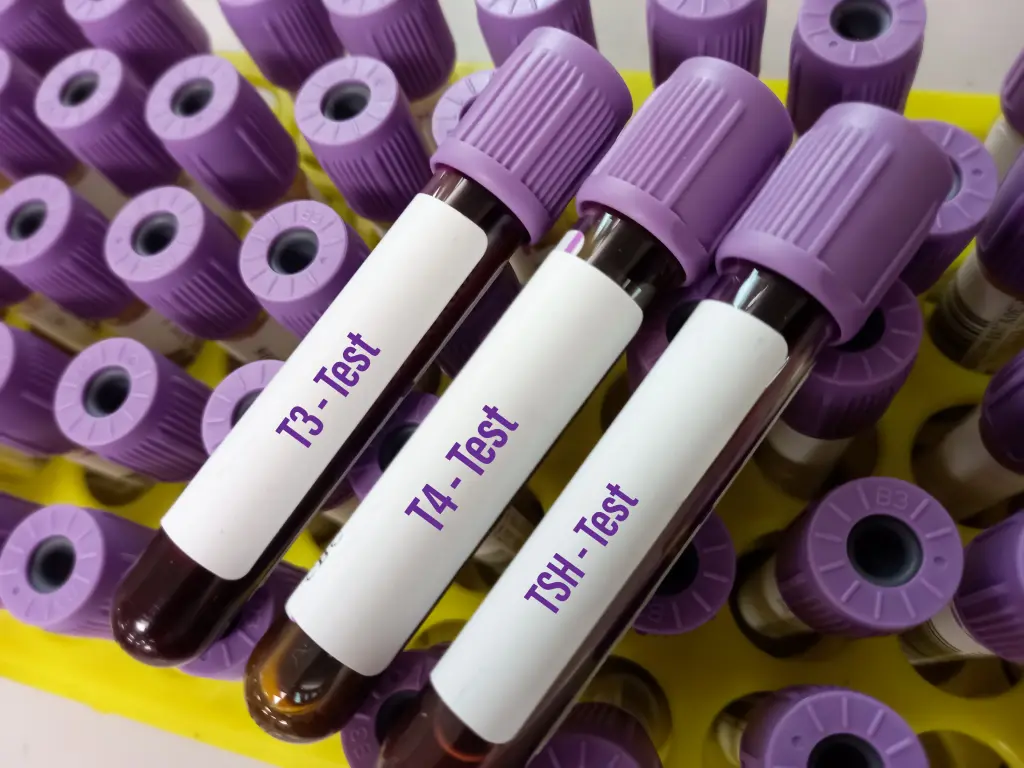
Thyroid blood tests are commonly ordered when symptoms such as fatigue, weight changes, or irregular heart rate occur. However, many people find the results confusing, especially when faced with terms like TSH, T3, and T4. Understanding what these markers mean can help you interpret your thyroid test results and know when further evaluation is needed.
Endocrinology care looks at how these hormones work together to regulate metabolism, energy, and overall hormonal balance.
What Is the Thyroid and Why It Matters?
The thyroid is a small gland in the neck that produces hormones essential for regulating metabolism, body temperature, heart rate, and energy. Even small changes in thyroid hormone levels can affect how your body functions.
To assess thyroid health, doctors commonly measure:
- Thyroid stimulating hormone (TSH)
- Thyroxine (T4)
- Triiodothyronine (T3)
Together, these form the foundation of a thyroid function test.
What Is TSH (Thyroid Stimulating Hormone)?
TSH is produced by the pituitary gland and acts as a signal to the thyroid, telling it how much hormone to produce.
- High TSH often suggests hypothyroidism, when the thyroid is underactive.
- Low TSH may indicate hyperthyroidism, when the thyroid is overactive.
Because TSH responds sensitively to changes in thyroid hormone levels, it is often the first marker checked when thyroid problems are suspected.
What to Know About T3 (Triiodothyronine)
T3 is the active thyroid hormone that affects metabolism and energy. Although there is less T3 in the blood than T4, it has a stronger biological impact.
T3 testing may be especially useful when:
- Symptoms suggest hyperthyroidism
- TSH is low but T4 appears normal
Endocrinologists often use T3 testing to clarify complex or borderline thyroid cases.
What T4 (Thyroxine) Does in Your Body
T4 is the main hormone produced by the thyroid. It circulates in the blood and can be converted into T3, the active hormone.
Abnormal T4 levels can help identify:
- Hypothyroidism when low
- Hyperthyroidism when high
T4 results are always interpreted alongside TSH to see if the thyroid is responding correctly.
When Is Thyroid Testing Useful?
Thyroid function tests may be recommended when individuals experience:
- Persistent fatigue or low energy
- Unexplained weight changes
- Heat or cold intolerance
- Changes in heart rate
- Mood or concentration difficulties
Testing is also important for monitoring known thyroid conditions and adjusting treatment over time.
Interpreting Results with Specialist Care

Thyroid test results should never be looked at in isolation. Symptoms, medical history, and hormone patterns must be considered together. A specialist uses a structured approach to provide personalised interpretation rather than just focusing on numbers.
Taking Charge of Your Thyroid Health
Understanding TSH, T3, and T4 can empower you to take an active role in your health. When interpreted correctly, thyroid tests give valuable insights into hormonal balance and metabolism.
At Nobel Diabetes, Thyroid & Endocrine Centre, thyroid evaluation focuses on accurate diagnosis, ongoing monitoring, and long-term wellbeing through evidence-based endocrine care.
Related Doctor

Dr Nitish Mishra
Senior Consultant Endocrinologist MBBS(India), MRCP(UK), FAMS(Singapore)
Dr Tng Eng Loon
Senior Consultant Endocrinologist MBBS (Singapore), FAMS (Singapore), MRCP (UK), MMed (Singapore), MSc (Endocrinology and Diabetes, UK), MSc (Evidence-based Healthcare, UK), FRCP (UK)Related Clinic

Nobel Diabetes, Thyroid and Endocrine Centre (Mount Alvernia)


Nobel Diabetes, Thyroid and Endocrine Centre (Mount Elizabeth Novena)