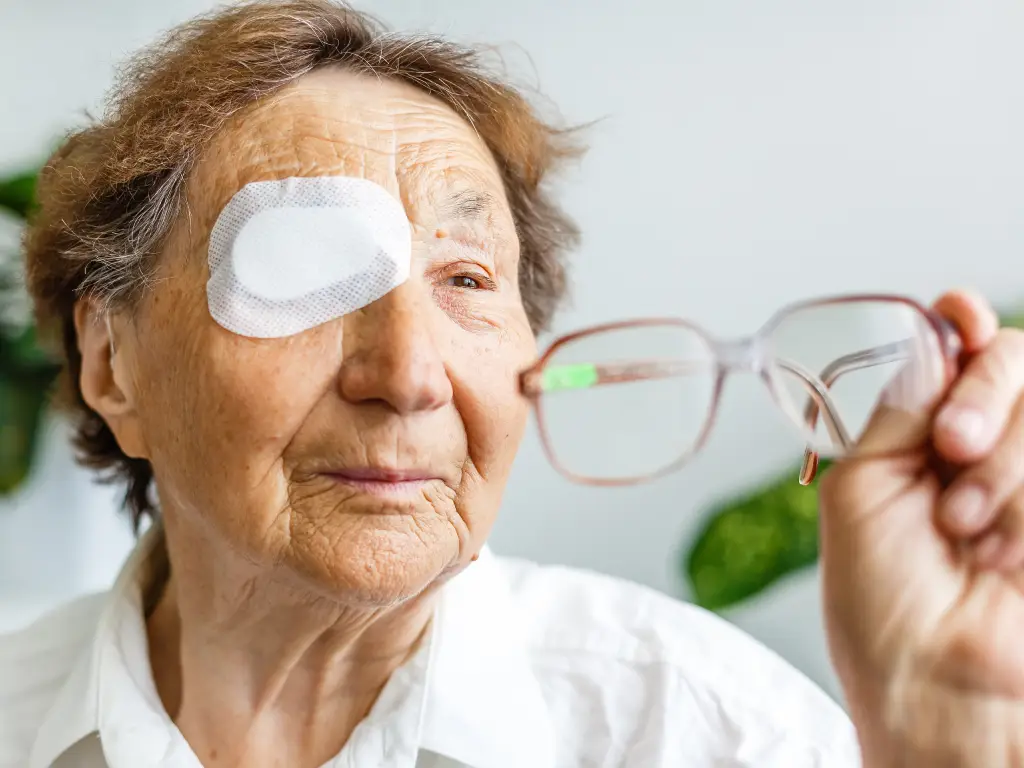
Cataract surgery is a common procedure whereby the cloudy lens in the eye is removed and replaced with a clear artificial lens. For many people, it allows seeing more clearly for everyday activities like reading, driving, and recognising faces of loved ones.
Will you still need glasses after cataract surgery? The answer depends on your lifestyle, vision priorities, and overall eye health.
Today, cataract surgery is more than just removing the cloudy lens in your eye. For patients, it can also be an opportunity to customise your post-operative vision by choosing intraocular lens options that may reduce your reliance on spectacles after surgery.
Understanding what to expect can help you make more confident decisions, together with an experienced ophthalmologist in Singapore.
Vision After Cataract Surgery
During cataract surgery, the cloudy natural lens is removed and replaced with an artificial lens implanted in the eye, known as an intraocular lens (IOL). This new lens helps your eyes focus light onto your retina to see images clearly.
The choice of IOL is planned carefully before surgery, as it plays a major role post operatively in:
- How clearly you see at distance, near, or in between
- Whether glasses are needed for certain activities
- How comfortable your vision feels in daily life
This is why cataract surgery planning today also involves post-operative vision planning.
Cataract Surgery as a Chance to Customise How You See After Surgery
Instead of asking, “Which lens is better?”, a more helpful question is: “How do I want to see and use my eyes every day?”
When planning cataract surgery, your eye specialist looks beyond measurements alone. They take time to understand how you use your eyesight in daily life, including:
- How much time you spend driving, reading, or using digital devices
- Whether you do prolonged computer work
- Your comfort with wearing glasses occasionally
- Any existing eye conditions that may affect outcomes
This personalised approach is a key part of care at Nobel Eye & Vision Centre, where patients receive planning based on real-life needs, not just spectacle degrees and numbers.
IOL Options Based On Lifestyle Needs
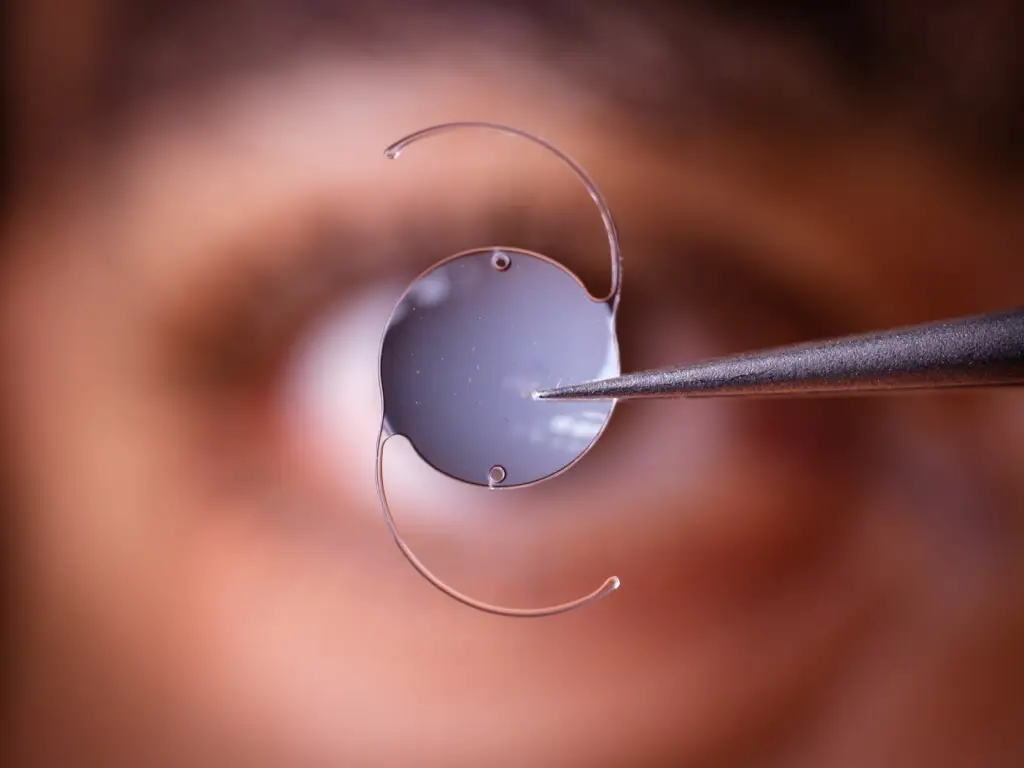
Modern lens options allow you to customise your eyesight based on your daily activities and lifestyle.
Most patients choose between three approaches for lens choices:
- Monofocal Lens Correction – Both eyes will be corrected to see clearly at only one distance: E.g. Sharp vision without glasses for distance in both eyes, while using reading glasses for near tasks.
- Monovision Lens Correction - Each eye will be corrected for its own single distance (e.g. one eye will see clearly for distant objects and one eye for near objects), reducing the need for reading glasses for many activities.
- Multifocal or Enhanced Depth of Focus Lens Correction – Each eye will be corrected to see clearly for multiple distances on its own.
Monofocal Lens Correction
Some patients choose monofocal correction lenses for both eyes to see clearly for a single distance — usually faraway objects.
Advantages:
- Sharp vision even in low light settings
- No haloes and glares
- Good 3D vision (stereopsis)
- Suitable even if there is other pathology in the eye like glaucoma or retina conditions.
Disadvantage:
- Will need separate reading glasses for near work
Monovision Lens Correction
Some patients prefer correcting each eye to see well for a different distance.
For example:
- One eye is corrected to see well for distant objects (the dominant eye)
- The other eye is corrected to see well for intermediate or near objects (the non-dominant eye)
Advantages:
- Reduce reliance on reading glasses.
- No haloes and glares
- Suitable even if there is other pathology in the eye like glaucoma or retina conditions
Disadvantages:
- Reduced 3D vision (stereopsis)
- May still need glasses when reading very small print, or for night driving or for low light conditions
Multifocal or Enhance Depth of Field Lens Correction
Some patients prefer each eye to be able to see multiple distances.
Advantages:
- Reduce reliance on separate reading glasses.
- Good 3D or stereopsis
Disadvantages:
- Haloes and glares, especially during night driving
- Slightly reduced contrast in low light conditions
- Not suitable if there is other pathology in the eye like glaucoma or retina conditions
Confidence in Your Eye Care Journey
Cataract surgery is not just about seeing clearly again, it’s also about feeling comfortable and confident in everyday life. With guidance from an experienced ophthalmologist like Dr Elton Tay at Nobel Eye & Vision Centre in Singapore, care can be tailored to how you live, work, and function through your day. Dr Tay is also accredited on the Great Eastern and Prudential insurance panels, which can help patients manage out-of-pocket treatment costs.
If you are considering cataract surgery in Singapore or would like personalised advice, a comprehensive eye assessment can help you explore options that suit your lifestyle and visual needs.
Understanding your choices is the first step toward confidence and comfort after cataract surgery.
Common Questions About Cataract Surgery
What should I expect after cataract surgery?
Most people notice clearer vision within days, but cataract eye surgery recovery time can vary from person to person. Temporary blurring, light sensitivity, or gradual improvement in clarity can be expected. Regular follow-up visits to your Ophthalmologists is important to monitor that recovery is on track, and to look out for complications like infections.
Can I claim Medisave or MediShield for cataract surgery?
Yes. Cataract surgery is eligible for Medisave withdrawals (up to MOH-approved limits, typically around S$2,450 per eye) and can also be claimed under MediShield Life or an Integrated Shield Plan to cover part of surgical and ward charges.
Additional costs, such as premium lenses or fees beyond approved limits, may need to be paid out-of-pocket. Coverage and claim amounts depend on your individual policy. At our clinic, our team can guide you through eligibility, claims, and documentation.
Related Doctor

Dr Elton Tay Lik Tong
Senior Consultant Ophthalmologist MBBS (Singapore), FAMS (Singapore), DAvMed (UK), MMed (Singapore)
Dr Livia Teo
Senior Consultant Ophthalmologist MBBS, MMED (Ophthalmology) MRCSEd (Ophthalmology), FRCSEd (Ophthalmology), FAMS (Ophthalmology)etrereetRelated Clinic

Nobel Eye & Vision Centre (Mount Elizabeth Novena)

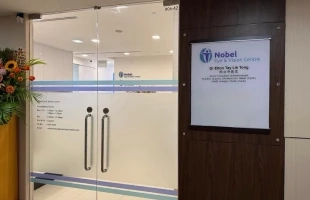
Nobel Eye & Vision Centre (Gleneagles Hospital)