Thyroid nodules are abnormal lumps that develop within the thyroid gland, located at the front of your neck. They can be solid, fluid-filled (cystic), or a mix of both, and may occur as a single nodule or multiple nodules.
The thyroid plays an important role in regulating metabolism and energy levels. While the presence of a nodule can sound concerning, most thyroid nodules are benign (non-cancerous) and do not cause serious health problems.
However, proper evaluation is important to determine whether a nodule requires monitoring or treatment.
Thyroid Nodules Symptoms
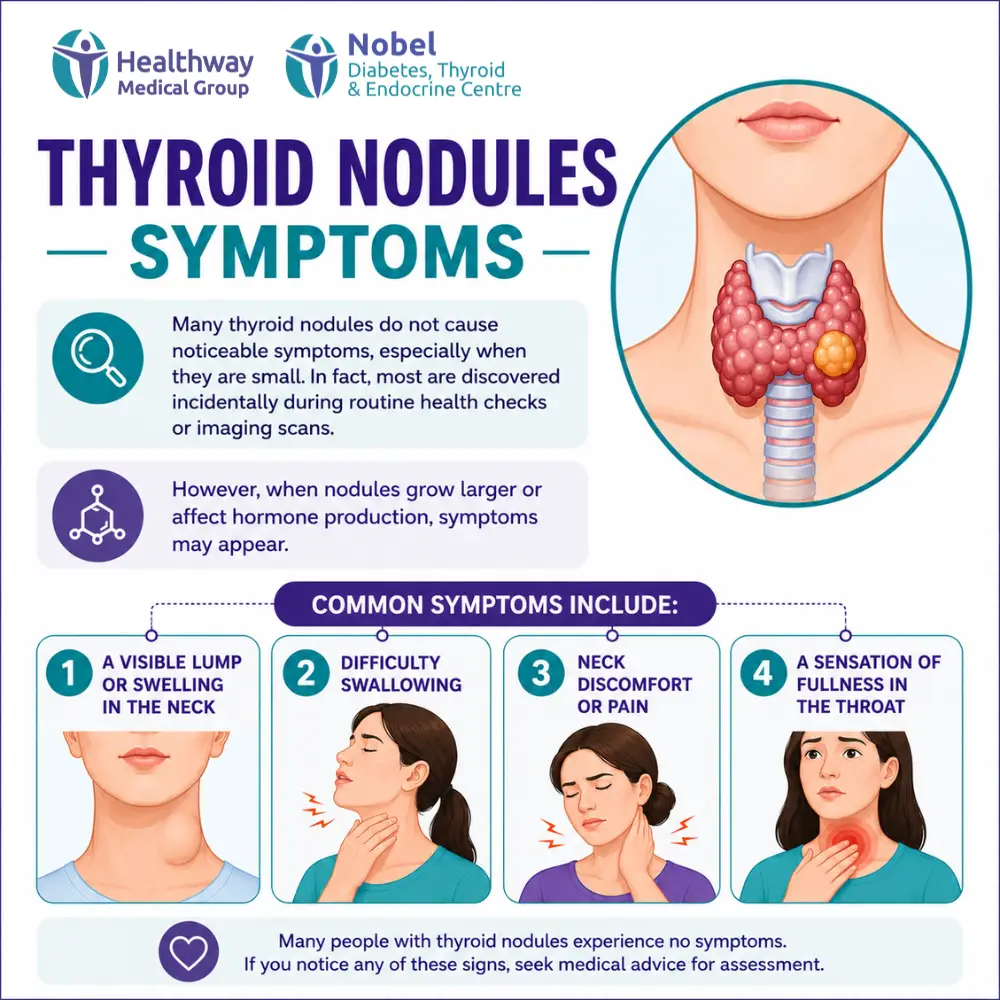
Many thyroid nodules do not cause noticeable symptoms, especially when they are small. In fact, most are discovered incidentally during routine health checks or imaging scans.
However, when nodules grow larger or affect hormone production, symptoms may appear.
Common symptoms include:
- A visible lump or swelling in the neck
- Difficulty swallowing
- Neck discomfort or pain
- A sensation of fullness in the throat
Some thyroid nodules may affect hormone production, leading to symptoms of thyroid imbalance.
Symptoms of hormonal changes
Some nodules affect how the thyroid gland produces hormones. This may lead to:
- Weight loss without trying
- Tremors
- Anxiety or restlessness
- Heat intolerance
- Heart palpitations
These symptoms may overlap with other conditions, which is why proper medical assessment is important.
What Causes Thyroid Nodules?
There is no single cause of thyroid nodules. Several conditions and factors may contribute to their development.
Common causes include:
1. Overgrowth of thyroid tissue
Sometimes thyroid tissue grows unevenly, forming a localized lump.
2. Thyroid cysts
Fluid filled cavities within the thyroid gland may develop due to degeneration or breakdown of existing nodules. Some cysts contain both fluid and solid components.
3. Iodine imbalance
Both iodine deficiency and excess intake may affect thyroid function and contribute to nodule formation.
4. Thyroid inflammation
Autoimmune conditions such as Hashimoto’s thyroiditis may lead to chronic inflammation of the thyroid gland, increasing the risk of nodules.
5. Multinodular goitre
Some individuals develop multiple nodules within an enlarged thyroid gland.
6. Overactive thyroid nodules
Certain nodules produce thyroid hormones independently, sometimes causing hyperthyroidism.
7. Thyroid cancer
Although most thyroid nodules are benign, a small percentage may be cancerous. This is why proper assessment is important.
Are Thyroid Nodules Cancerous?
Most thyroid nodules are not cancerous. In fact, about 90–95% are benign.
That said, certain features may raise concern, such as:
- Rapid growth
- Hard or irregular texture
- Associated voice changes
- Family history of thyroid cancer
This is why proper assessment is important to rule out malignancy and guide the next steps.
Thyroid Nodules Risk Factors
Certain factors may increase the risk of developing thyroid nodules:
- Increasing age
- Female gender
- Family history of thyroid disease
- Radiation exposure to the head or neck
- Iodine deficiency or imbalance
- Existing thyroid conditions
How Are Thyroid Nodules Diagnosed?
Diagnosis usually involves a combination of clinical evaluation and tests:
1. Medical History and Physical Examination
A doctor may examine the neck to assess the size, texture, and movement of the thyroid gland.
Questions may also focus on symptoms, family history, radiation exposure, and thyroid-related conditions.
2. Blood Tests
Blood tests may be performed to evaluate thyroid hormone levels, including:
- Thyroid stimulating hormone (TSH)
- Free T4
- Free T3
These tests help determine whether the thyroid is functioning normally.
3. Thyroid ultrasound
Ultrasound is the key imaging tool used to evaluate thyroid nodules. Ultrasound helps doctors estimate the likelihood of cancer in the nodules so that they can decide if biopsy is necessary.
4. Fine needle aspiration (FNA) biopsy
A thin needle is used to collect cells from the nodule for laboratory analysis. This helps determine whether the nodule is benign or suspicious.
FNA biopsy can help distinguish benign nodules from cancerous ones.
Thyroid Nodules Treatment Options
Treatment depends on the size, type, and whether symptoms are present.
1. Observation (monitoring)
If the nodule is benign and not causing symptoms, regular monitoring may be recommended.
2. Medications
Thyroid medications may be used if hormone imbalance is present.
3. Drainage of cystic nodules
Fluid-filled nodules may be drained to relieve discomfort or pressure.
4. Surgery or radioactive treatment
In selected cases, such as large, symptomatic, or suspicious nodules, surgery or other treatments may be recommended.
Treatment is always tailored to the individual.
When Should You See a Doctor?

You should consider medical evaluation if you notice:
- A lump in the neck
- Persistent throat pressure
- Difficulty swallowing
- Voice changes
- Unexplained weight changes
- Symptoms of an overactive thyroid
- Rapid enlargement of a neck swelling
Early assessment helps determine whether the nodule is benign and whether treatment or monitoring is necessary.
Book an AppointmentFrequently Asked Question (FAQ) About Thyroid
Yes. Thyroid nodules are very common, particularly among women and older adults. Many are discovered incidentally during imaging tests.
Stress itself does not directly cause thyroid nodules. However, stress may worsen symptoms associated with thyroid hormone imbalance.
Most thyroid nodules are painless. However, bleeding into a cyst or inflammation may occasionally cause discomfort.
No. The need for biopsy depends on factors such as size, ultrasound appearance, and overall cancer risk assessment.
Most benign thyroid nodules remain benign. However, regular monitoring may still be recommended depending on the nodule’s characteristics.
You may first consult a general practitioner, who may refer you to an endocrinologist if needed. Dr. Tng Eng Loon & Dr. Nitish Mishra treats patients with thyroid problems and diabetes, hormonal, and metabolic disorders.
Our Specialist

Dr Nitish Mishra
Senior Consultant Endocrinologist Dr. Nitish Mishra, a UK-trained Endocrinologist, specialises in diabetes, thyroid, pituitary, adrenal, and metabolic disorders, including PCOS and osteoporosis. He completed his specialist training at King’s College Hospital, London.