

Insomnia is a common sleep disorder characterised by difficulty falling asleep, staying asleep, or waking up too early and being unable to return to sleep.
People with insomnia often wake up feeling unrefreshed and tired, even after spending enough time in bed. Over time, poor sleep can affect mood, energy levels, concentration, work performance, and overall health.
In Singapore, insomnia is increasingly linked to:
- High work stress
- Excessive digital screen exposure
- Shift work
- Anxiety and burnout
Most adults need 7 to 9 hours of sleep each night, although individual sleep needs may vary slightly.
Types of Insomnia
1. Acute Insomnia (Short-Term)
- Lasts a few days to weeks
- Often triggered by stress, emotional events, travel, or illness
- Usually resolves when the trigger is removed
2. Chronic Insomnia (Long-Term)
- Occurs at least 3 times per week for 3 months or longer
- Often linked to medical, psychological, or lifestyle causes
- Requires structured treatment
Insomnia Symptoms
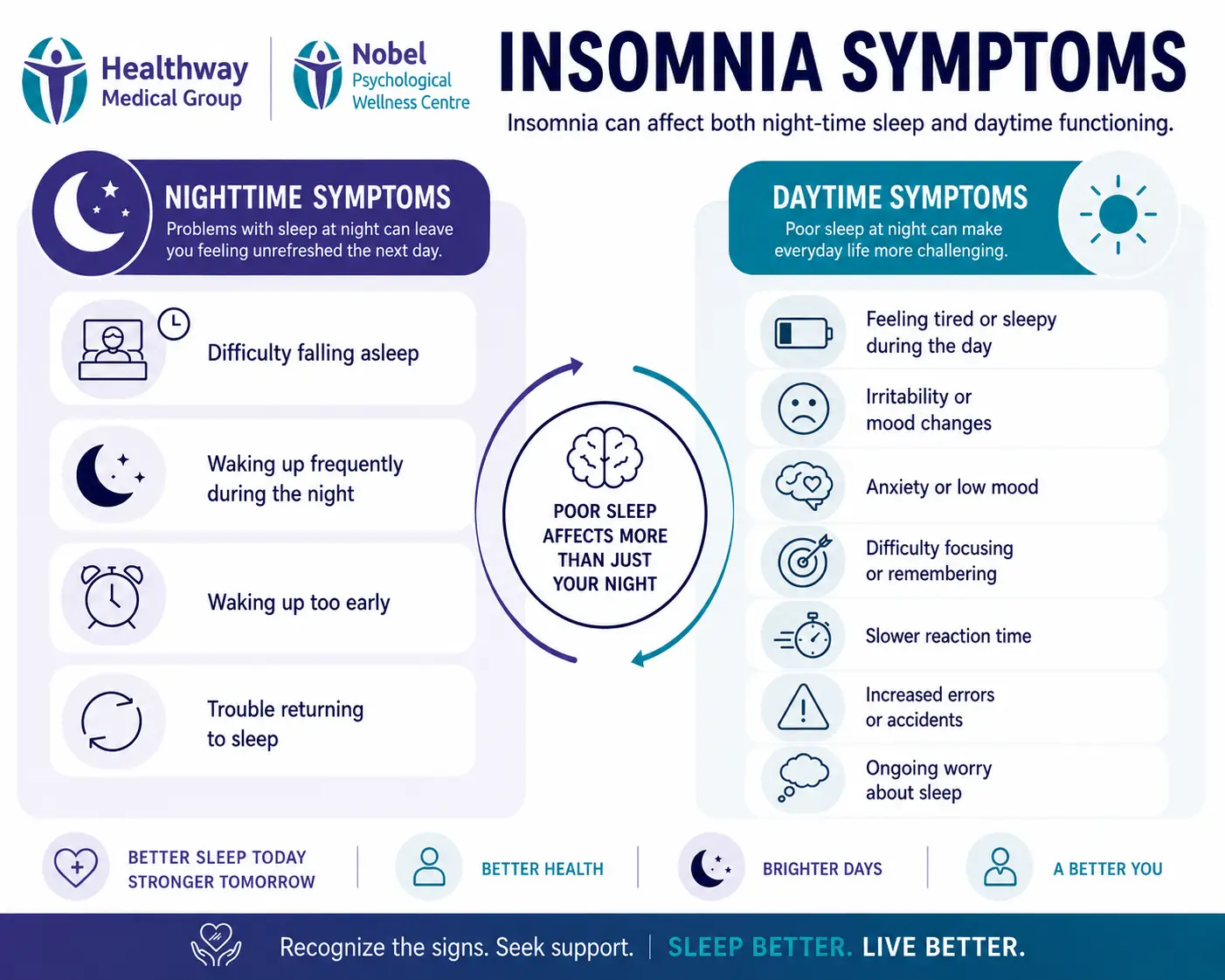
Insomnia can affect both the quality of sleep at night and a person's ability to function during the day.
Night-time Symptoms
- Difficulty falling asleep
- Waking up frequently during the night
- Waking up too early in the morning
- Trouble returning to sleep
Daytime Symptoms
- Feeling tired or sleepy during the day
- Irritability or mood changes
- Anxiety or low mood
- Difficulty focusing or remembering
- Slower reaction time
- Increased errors or accidents
- Ongoing worry about sleep
What Causes Insomnia?
Insomnia is often caused by a combination of psychological, medical, environmental, and lifestyle factors. Identifying the underlying cause is an important step in determining the most appropriate treatment.
1. Psychological Causes
- Stress and work-related pressure
- 2. Anxiety disorders
- Depression
- 3. Overthinking at night
2. Lifestyle Causes
- Irregular sleep schedule
- Excessive screen time before bed
- Caffeine, nicotine, or alcohol use
- Shift work or jet lag
- Excessive daytime naps
3. Medical Conditions
- Chronic pain conditions
- Asthma or other breathing issues
- Acid reflux (GERD)
- Overactive thyroid
- Neurological conditions
4. Sleep Disorders
5. Environmental Factors
- Noise
- Bright light exposure
- Uncomfortable temperature or mattress
Insomnia in Older Adults
As people age, sleep patterns may change:
- Lighter sleep and earlier waking
- More frequent awakenings during the night
- Increased sensitivity to noise
- Higher risk due to medical conditions or medications
Older adults still require similar total sleep duration but may experience reduced sleep quality.
Insomnia in Children and Adolescents
Children and teens may experience insomnia due to:
- Delayed sleep cycles
- School-related stress
- Excessive screen time
- Irregular bedtime habits
Risk Factors for Insomnia
You may be more likely to develop insomnia if you:
- Are under chronic stress
- Are over 60 years old
- Are female (hormonal changes)
- Have mental or physical health conditions
- Work irregular shifts
- Travel frequently
- Have poor sleep habits
How Insomnia Affects Your Health
Sleep is essential for brain function, physical recovery and overall health. Long-term insomnia may lead to:
- Reduced work or academic performance
- Increased risk of depression and anxiety
- High blood pressure
- Heart disease risk
- Obesity and metabolic issues
- Reduced immune function
- Higher risk of accidents
Severe insomnia can significantly reduce quality of life and daily functioning.
Diagnosis of Insomnia
Doctors may diagnose insomnia through:
1. Clinical Assessment
- Sleep history review
- Lifestyle evaluation
- Medical history and medication review
- Mental health screening
- Screening for other sleep disorders
2. Sleep Diary
Tracking sleep patterns over 1–2 weeks
3. Physical Examination
To rule out underlying medical causes
4. Sleep Studies (Polysomnography)
These are not routinely required but may be recommended if another sleep disorder, such as obstructive sleep apnoea, is suspected.
Insomnia Treatment Options
Cognitive Behavioral Therapy for Insomnia
CBT-I is the standard treatment for chronic insomnia.
It helps you:
- Reduce anxiety about sleep
- Change negative sleep thoughts
- Improve sleep habits
- Reset your body’s sleep cycle
Common CBT-I techniques:
- Stimulus control therapy
- Sleep compression therapy
- Relaxation training
- Cognitive restructuring
Sleep Hygiene Improvement
Key lifestyle changes include:
- Keep consistent sleep and wake times
- Avoid caffeine from the late afternoon onwards
- Avoid alcohol and nicotine at night
- Reduce screen exposure 1–2 hours before bed
- Create a dark, quiet, cool sleep environment
- Use the bed only for sleep (avoid working, eating or watching television in bed)
Medications

In some cases, doctors may prescribe sleep medications such as:
- Z-drugs (e.g. zolpidem)
- Melatonin
- Sedative antidepressants (in selected patients)
- Orexin receptor antagonists
Some medications, particularly Z-drugs, carry a risk of dependence and should generally be used only for short-term treatment.
Treating Underlying Conditions
Treatment may also focus on:
- Anxiety or depression management
- Chronic pain control
- Hormonal imbalance treatment
- Sleep apnoea management
What Should You Do If You Have Insomnia?
If you are struggling with sleep:
- Avoid forcing yourself to fall asleep in bed
- Get out of bed if you have been awake for about 20 minutes and do a quiet, relaxing activity until you feel sleepy
- Practice breathing or relaxation exercises
- Avoid checking the clock repeatedly
- Reduce stimulation before bedtime
- Maintain a consistent sleep routine
Prevention Tips
To help prevent insomnia:
- Stick to a regular sleep schedule
- Stay physically active during the day
- Avoid heavy meals before bedtime
- Limit naps
- Manage stress effectively
- Keep your bedroom sleep-friendly
When to See a Doctor
Seek medical help if:
- Insomnia persists for several weeks
- Sleep problems affect daily life
- You feel constantly exhausted
- You rely on sleeping pills frequently
- You have signs of anxiety or depression
Frequently Asked Questions (FAQ)
Yes. Chronic insomnia can affect both mental and physical health if it is left untreated.
Short-term insomnia may go away once stress or triggers resolve. However, chronic insomnia usually requires treatment to improve sleep patterns.
CBT-I is the most effective long-term treatment.
Yes, stress is one of the most common causes.
Most adults need 7–9 hours per night.
You could first see a General Practitioner (GP). If insomnia is linked to stress, anxiety, or depression, you may be referred to a psychiatrist. At Nobel Psychological Wellness Centre Singapore, our psychiatrists provide assessment and treatment for insomnia, anxiety, depression, and other sleep-related conditions.