

Glucose is an important source of energy for the body and brain. Hypoglycemia occurs when the amount of glucose in the blood falls too low. For many people with diabetes mellitus, a blood glucose reading below 3.9 mmol/L, or 70 mg/dL, is considered low. However, the level at which symptoms develop may differ between individuals. Your doctor can advise you on the appropriate target range for you.
Hypoglycemia commonly affects people who use insulin or certain diabetes medicines. It can also occur in people without diabetes mellitus, although this is less common.
Low blood sugar should be treated promptly. In a severe state, it can cause confusion, seizures, or loss of consciousness.
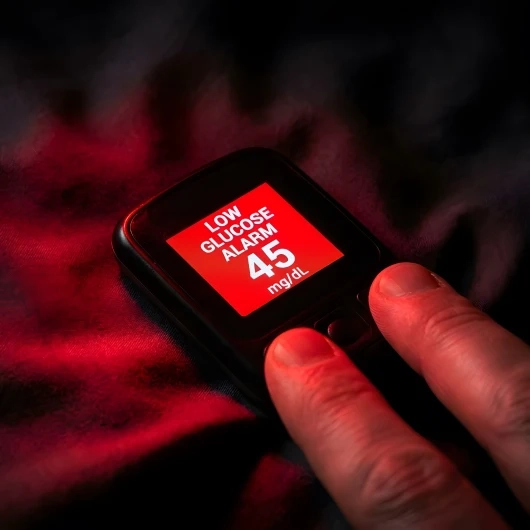
What Are the Symptoms of Hypoglycemia?
Symptoms of hypoglycemia can appear suddenly.
Common symptoms include:
- Shaking
- Sweating
- Sudden hunger
- Dizziness
- Headache
- Weakness
- A fast heartbeat
- Irritability
- Difficulty concentrating
As blood sugar drops further, a person may become confused, drowsy, unsteady, or have blurred vision and slurred speech.
Severe hypoglycemia is a medical emergency. It may cause seizures, loss of consciousness, or coma, and the person may need help from someone else.
What Causes Hypoglycemia?
Hypoglycemia happens when blood sugar falls too low.
In people with diabetes mellitus, it is often caused by insulin or certain diabetes medicines. It may happen after taking too much medicine, skipping a meal, eating less than usual, exercising more than expected, or drinking alcohol without food.
In people without diabetes mellitus, low blood sugar is less common. Possible causes include certain medicines, heavy alcohol use, serious illness, poor nutrition, hormone problems, previous stomach surgery or, rarely, an insulin producing tumour.
Anyone without diabetes mellitus who experiences repeated episodes of low blood sugar should see a doctor for further assessment.
How Is Hypoglycemia Diagnosed?
If you have diabetes mellitus, check your blood glucose with a glucose meter or continuous glucose monitor when symptoms occur.
A doctor may review:
- Your symptoms and glucose readings
- The timing of meals and physical activity
- Your medicines and insulin doses
- Alcohol intake
- Previous low blood sugar episodes
- Kidney, liver, and hormone function
For people without diabetes mellitus, it is important to confirm that symptoms occur together with a low blood glucose reading and improve when glucose returns to normal.
How Is Hypoglycemia Treated?
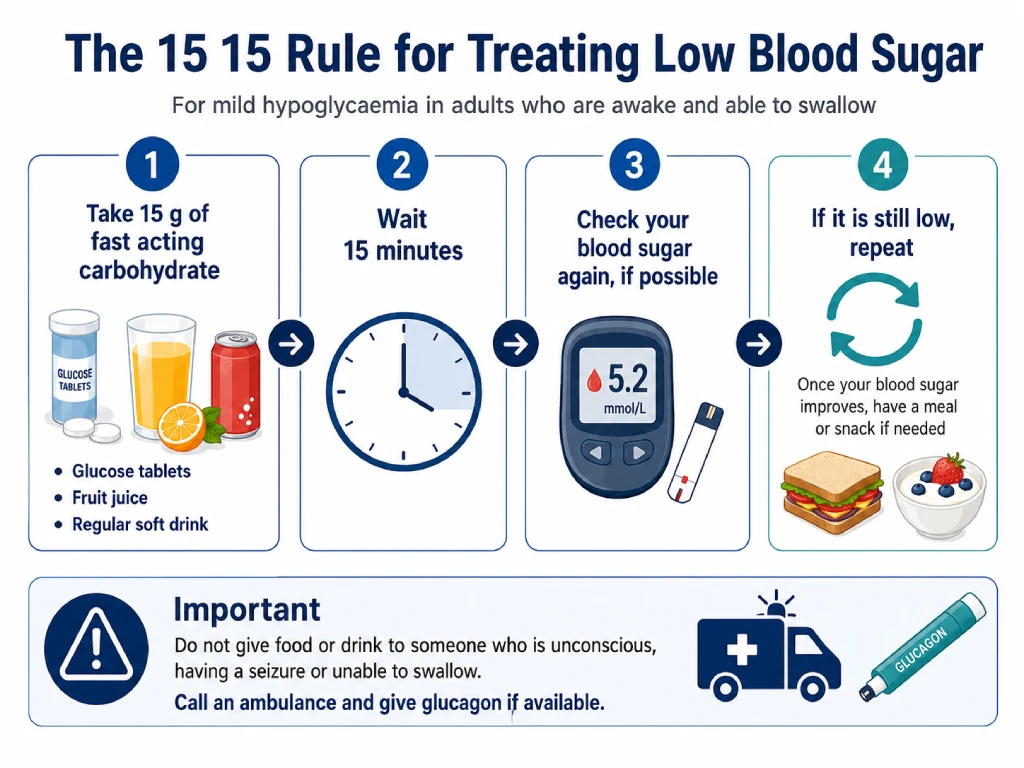
Treatment depends on whether the person is awake and able to swallow.
For mild hypoglycemia, take about 15 grams of fast acting carbohydrate, such as glucose tablets, fruit juice, or regular soft drink. Wait 15 minutes, then check the blood sugar again. Repeat if it is still low. If the blood sugar remains low after 2 attempts, call for an ambulance.
Once the blood sugar improves, have a meal or snack if needed. This is commonly known as the 15 15 rule. Fast acting carbohydrates are preferred because food containing more fat may take longer to raise blood sugar.
Severe hypoglycemia is an emergency. Do not give food or drink to someone who is unconscious, has a seizure, or is unable to swallow. Place them on their side, give glucagon if available and call an ambulance immediately.
How Can Hypoglycemia Be Prevented?
Hypoglycemia risks can be reduced by taking medicines as prescribed, eating regular meals, and checking blood sugar levels when advised.
It also helps to carry a fast-acting source of sugar, avoid drinking alcohol on an empty stomach, and plan ahead for exercise.
If episodes happen often, keep a simple record of your blood sugar, meals, exercise, and medicines. This can help your doctor identify patterns and adjust your treatment.
What Are Some Possible Complications?
Untreated or severe hypoglycemia may lead to:
- Falls and injuries
- Seizures
- Loss of consciousness
- Coma
- Brain injury in prolonged severe cases
- Death in rare cases
Frequent episodes may also lead to hypoglycemia unawareness and anxiety about future episodes. Some people may take less diabetes medicine because they fear low blood sugar, which can result in poorly controlled diabetes mellitus.
When Should You See a Doctor?
Arrange a medical review if:
- You experience symptoms of hypoglycemia but do not have diabetes mellitus
- Low blood sugar episodes happen frequently
- Episodes occur during sleep
- You no longer notice the early warning signs
- Your blood sugar remains low despite treatment
- You need help from another person during an episode
- Your meals, activity levels, or weight have changed
- You are unsure how to adjust your diabetes care during exercise, fasting, or illness
A doctor can review your medicines, blood glucose patterns, and possible underlying causes.
Seek emergency medical attention if the person is unconscious, having a seizure, unable to swallow, or does not improve after treatment.
Book an AppointmentFrequently Asked Questions (FAQ)
No. Diabetes mellitus is usually associated with blood sugar levels that are too high. However, people with diabetes mellitus may develop hypoglycemia as a result of insulin or certain diabetes medicines.
For many people with diabetes mellitus, a blood glucose level below 3.9 mmol/L, or 70 mg/dL, is considered low. Individual targets can differ, so follow the advice given by your doctor.
Skipping a meal can increase the risk of hypoglycemia in people who use insulin or certain diabetes medicines.
Yes, particularly in people who use insulin or medicines that increase insulin release. The effect may happen during exercise or several hours later.
Yes. Alcohol can reduce the liver’s ability to release stored glucose, particularly when consumed without food. The effect may be delayed and can occur during sleep.
Carry a source of fast-acting carbohydrates, such as glucose tablets or glucose gel. People at risk of severe hypoglycemia may also be prescribed glucagon.
You should first consult a general practitioner if the cause of your low blood sugar is unclear. At Nobel Diabetes, Thyroid and Endocrine Centre in Singapore, our endocrinologist assesses and manage diabetes mellitus, recurrent hypoglycemia and other hormonal and metabolic conditions.