
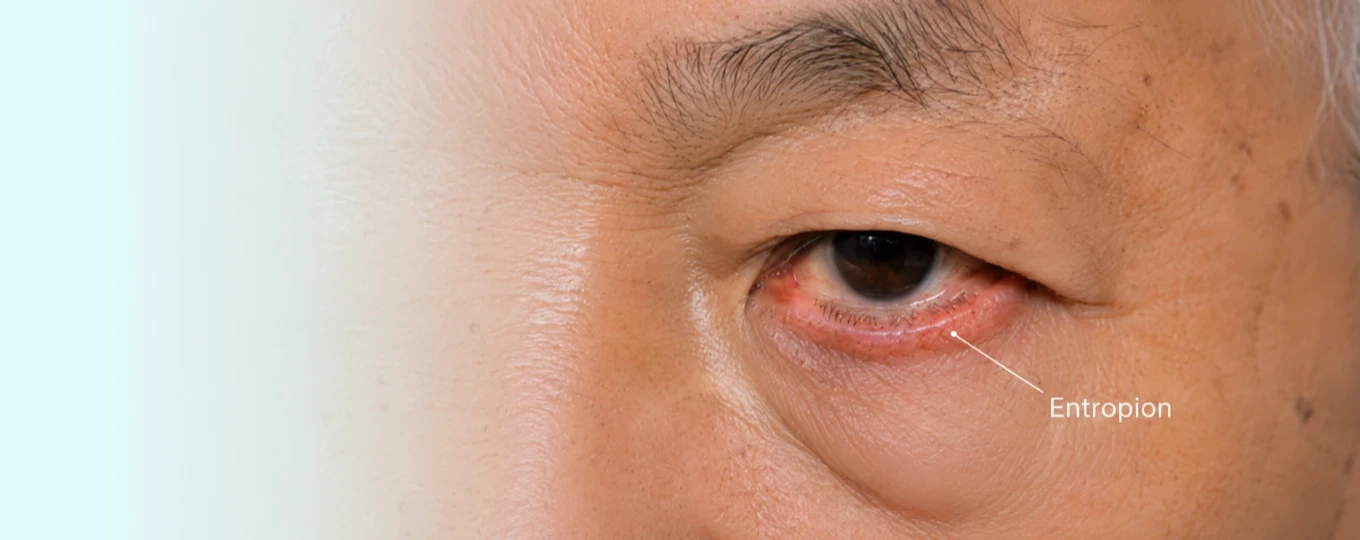
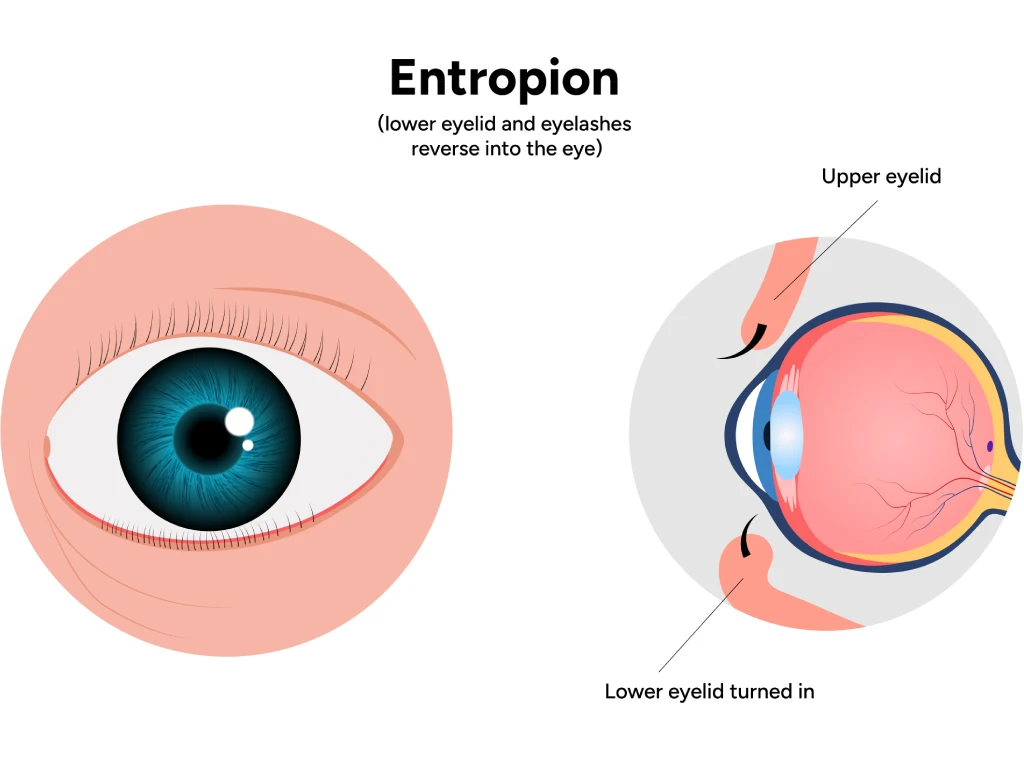
Entropion occurs when a part, or all, of an eyelid folds inwards instead of resting normally against the eye. The condition usually affects the lower eyelids and may occur in one eye or both eyes. In some people, the eyelid remains turned inward, while in others, the problem is noticeable only when blinking firmly or when the eyes are squeezed shut.
When the eyelid turns inward, the eyelashes and eyelid skin repeatedly brush against the conjunctiva and cornea. The cornea is the clear surface covering the front of the eye, directly over the pupil and iris. It plays an important role in focusing light.
Repeated friction can irritate this delicate surface and, in severe or prolonged instances of entropion, may result in scratches, ulcers, scarring, or infection.
What Are the Symptoms of Entropion?
Symptoms of entropion are mainly caused by contact of the eyelashes and eyelid against the surface of the eye.
Common symptoms can include:
- A persistent sensation that something is in the eye
- Eye redness
- Eye irritation or discomfort
- Eye pain
- Excessive tearing or watery eyes
- Blurred vision
- Sensitivity to bright light
- Sensitivity to wind
- Itching or burning
- Mucous discharge
- Crusting around the eyelid
Symptoms may initially come and go. However, they can become more persistent as the position of the eyelid changes and becomes more pronounced over time.
How Is Entropion Diagnosed?
Entropion can often be identified during an eye and eyelid examination.
An eye specialist will assess the position of the eyelid, eyelashes, and surrounding tissues. The surface of the eye will also be examined for irritation or signs of corneal damage.
The assessment may include checking:
- Whether the eyelid remains inward at rest
- Whether blinking or squeezing the eyes causes the eyelid to turn inward
- How loose the lower eyelid has become
- Whether the eyelashes touch the cornea
- Whether scarring is present
- Whether previous surgery or trauma has affected the eyelid
- Whether the surface of the eye has been damaged
An eye specialist may also perform tests that assess how quickly the lower eyelid returns to its normal position after being gently pulled away from the eye.
How Is Entropion Managed or Treated?
Treatment for entropion depends on the cause and how much the eyelid has turned inwards.
For mild or temporary cases, treatment may focus on protecting the eye from irritation caused by the eyelashes rubbing against the surface of the eye. This may include:
- Lubricating eye drops or ointment to reduce dryness and irritation
- Temporary eyelid taping to help keep the eyelid in a better position
- Removing misdirected eyelashes in selected cases to reduce rubbing against the eye
- Treating underlying inflammation or infection if this is contributing to the eyelid turning inwards
In some cases, an eye specialist may recommend a temporary procedure or injection to help reposition the eyelid.
When entropion is persistent or caused by age-related changes, scarring or structural problems, eyelid surgery may be recommended. Surgery usually involves tightening or repositioning the eyelid so that it sits normally, and the eyelashes no longer rub against the eye.
An eye specialist can assess the cause and severity of entropion and recommend the most appropriate treatment.
Can Entropion Be Prevented?
Not every case of entropion can be prevented, particularly when it develops because of age-related changes.
However, several measures may help protect the eyelids and reduce the risk of scarring or injury.
These include:
- Avoiding frequent or forceful eye rubbing
- Protecting the eyes and face from injury
- Wearing appropriate eye protection during hazardous activities
- Seeking prompt treatment for significant eye inflammation or infection
- Attending follow-up care after an eyelid or eye injury
These measures cannot guarantee prevention, but they may help reduce damage to the eyelid tissues.
When Should You See an Eye Specialist?
Arrange an eye examination if you notice that your eyelids or eyelashes are turning inward, particularly if you repeatedly experience a foreign body sensation.
Seek prompt medical attention if you develop:
- Increasing eye redness
- Significant eye pain
- New or worsening sensitivity to light
- Reduced or blurred vision
- Severe persistent irritation
These symptoms may indicate a corneal injury and should not be ignored. Seek prompt assessment by an Ophthalmologist at Nobel Eye & Vision Centre.
Book an AppointmentFrequently Asked Questions (FAQ)
Entropion can become serious when eyelashes repeatedly rub against the cornea. Without treatment, this may lead to corneal abrasions, ulcers, infection, scarring, and potentially affect vision.
Persistent entropion caused by structural changes in the eyelid is unlikely to correct itself without addressing the underlying problem. Temporary treatments may reduce symptoms or reposition the eyelid for a period of time. Surgery is considered when permanent correction is required.
Yes. Entropion may affect one eye or both eyes, although severity may be asymmetrical.
Continued eyelash friction can damage the surface of the cornea. Possible consequences include abrasions, ulcers, infections, corneal scarring, and reduced vision.
Lubricants, protective contact lenses, taping, sutures or botulinum toxins may provide temporary relief or protect the eye. However, persistent entropion caused by structural changes often needs to be surgically corrected.
Yes. Although surgery can correct eyelid position, enctropion can occasionally recur, particularly when underlying ageing, scarring or facial nerve problems continue to affect the eyelid.
If you notice persistent or sudden entropion, it is best to consult an Ophthalmologist. In Singapore, centres such as Nobel Eye & Vision Centre provide assessment and treatment for entropion, a thorough evaluation will determine whether the condition is merely cosmetic or poses a medical concern.