
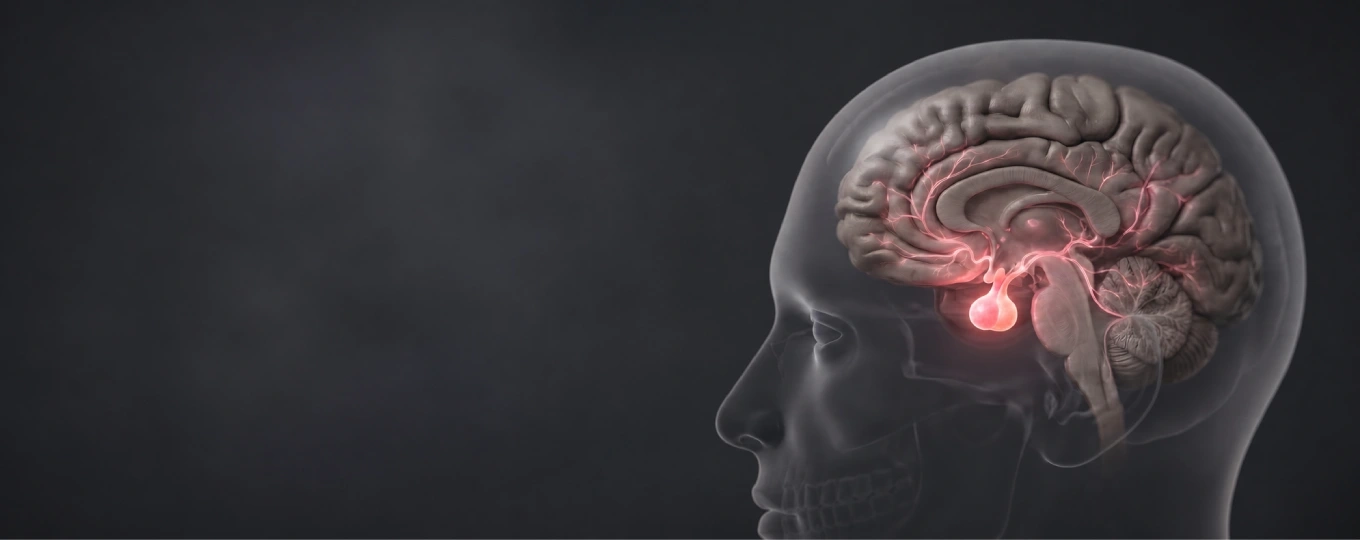
A pituitary adenoma (pituitary tumour) is a usually benign (non-cancerous) tumour that develops in the pituitary gland, a small pea sized gland located at the base of the brain, just behind the nose.
Although these tumours are not cancerous in most cases, they can affect your health by disrupting hormone production and placing pressure on nearby structures, such as the optic nerves.
The pituitary gland is often called the body’s “master gland” because it helps produce hormones that influence growth, metabolism, stress response, reproduction, fertility, and many other bodily functions.
When a pituitary adenoma develops, it may cause the gland to produce too many hormones, interfere with the production of others, or grow large enough to compress nearby tissues.
While many pituitary adenomas grow slowly and may not cause symptoms initially, early diagnosis can help prevent complications and improve long-term outcomes.
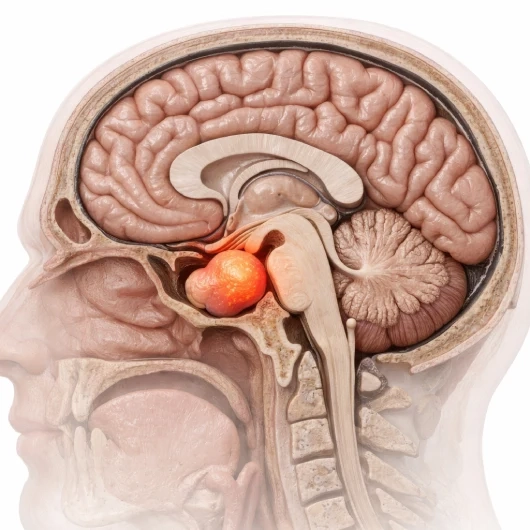
Types of Pituitary Adenomas
Doctors classify pituitary adenomas based on their size and whether they produce hormones, as these factors influence the symptoms you experience and the most appropriate treatment.
1. Size
Microadenoma: Smaller than 10 mm, often discovered before they cause pressure on surrounding structures.
Macroadenoma: 10 mm or larger and more likely to cause symptoms by pressing on nearby structures such as the optic nerves or healthy pituitary tissue.
2. Hormone Activity
Functioning Pituitary Adenoma
These tumours produce excessive amounts of one or more hormones, resulting in hormone-related conditions such as prolactinoma, acromegaly, or Cushing disease.
Nonfunctioning Pituitary Adenoma
These tumours do not produce excess hormones. Symptoms usually occur only when the tumour grows large enough to compress nearby structures or interfere with normal pituitary function.
What Causes Pituitary Adenomas?
The exact cause of most pituitary adenomas remains unknown. Researchers believe these tumours develop when changes occur in the DNA of pituitary cells, causing them to grow uncontrollably. Why these changes happen is not yet fully understood.
A small number of pituitary adenomas are associated with inherited genetic conditions, including:
- Multiple endocrine neoplasia type 1 (MEN 1)
- Familial isolated pituitary adenoma (FIPA)
- Carney complex
- McCune-Albright syndrome
However, most people diagnosed with a pituitary adenoma do not have a family history of the condition.
What Are the Symptoms of a Pituitary Adenoma?
Symptoms vary depending on whether the tumour produces hormones, its size, and whether it compresses nearby structures.
Symptoms Caused by Hormone Overproduction
Different pituitary adenomas produce different hormones, resulting in different symptoms.
| Tumour Type | Common Symptoms |
|---|---|
| Prolactinoma | Women: Irregular or absent periods, breast milk production unrelated to pregnancy, fertility difficulties. Men: Reduced libido, erectile dysfunction, infertility. |
| Growth Hormone-Producing Adenoma | Adults: Enlarged hands and feet, changes in facial appearance, joint pain, excessive sweating, sleep apnoea. Children: Excessive growth before growth plates close, resulting in gigantism. |
| ACTH-Producing Adenoma | Weight gain around the abdomen and upper back, round facial appearance, easy bruising, muscle weakness, high blood pressure, mood changes, diabetes. |
| TSH-Producing Adenoma | Rapid heartbeat, anxiety, excessive sweating, weight loss, tremors. |
As the tumour enlarges, it may compress nearby structures, leading to:
- Persistent headaches
- Blurred or double vision
- Loss of peripheral vision
- Facial numbness
- Reduced pituitary hormone production
- Fatigue
- Unexplained weight changes
How Is Pituitary Adenoma Diagnosed?
Diagnosis typically involves a combination of clinical assessment, hormone testing, and imaging studies.
1. Blood Tests
Blood tests help measure hormone levels, including:
- Prolactin
- Growth hormone and IGF-1
- ACTH and cortisol
- Thyroid hormones
- Testosterone or oestrogen-related hormones
2. Urine Tests
Urine testing may be used to assess hormone production, particularly when evaluating Cushing disease.
3. MRI Scan
MRI is the preferred imaging method for identifying pituitary tumours and determining their size and relationship to surrounding structures.
4. Visual Field Testing
If the tumour is near the optic nerves, visual field testing helps detect vision loss that may not yet be noticeable.
How Is a Pituitary Adenoma Treated?
Treatment depends on the tumour type, size, hormone activity, and symptoms.
1. Observation
Small, nonfunctioning tumours that are not causing symptoms may only require regular monitoring with MRI scans and hormone testing.
2. Medication
Certain pituitary adenomas respond well to medication.
These may include:
- Dopamine agonists
- Somatostatin analogues for growth hormone-secreting tumours
- Hormone replacement therapy when hormone deficiencies develop
3. Surgery
Surgery is often recommended when:
- The tumour affects vision
- Symptoms are significant
- Hormone production cannot be controlled with medication
Most pituitary adenomas are removed using a minimally invasive transsphenoidal approach through the nose.
4. Radiation Therapy
Radiation therapy may be used when:
- Surgery is not possible
- Tumour tissue remains after surgery
- The tumour returns after treatment
Complications of Untreated Pituitary Adenomas
Without treatment, some pituitary adenomas may lead to:
- Permanent vision loss
- Hormonal deficiencies
- Infertility
- Osteoporosis
- Diabetes
- Cardiovascular disease
- Pituitary apoplexy, a rare but serious condition involving sudden bleeding into the tumour requiring urgent medical attention
Pituitary apoplexy is often overlooked in many patient resources but is considered a medical emergency. It may cause sudden severe headaches, visual disturbances, and altered consciousness. This is an important reason why persistent symptoms should not be ignored.
When Should You See a Doctor?

Consider medical evaluation if you experience:
- Persistent headaches without an obvious cause
- Changes in vision
- Irregular menstrual cycles
- Breast milk production when not pregnant
- Reduced libido
- Fertility problems
- Enlarging hands, feet, or facial features
- Unexplained weight gain or weight loss
- Persistent fatigue or weakness
Prompt evaluation allows hormone disorders to be identified and treated before complications develop.
Book an AppointmentFrequently Asked Questions
No. The vast majority are benign and do not spread to other parts of the body.
Yes. Some pituitary adenomas interfere with reproductive hormones and may affect fertility in both men and women.
There is currently no proven way to prevent most pituitary adenomas because their exact cause remains unclear. However, early recognition of symptoms and routine medical evaluation can help identify the condition before complications develop.
Yes. Larger tumours may cause persistent headaches by pressing on surrounding tissues.
Some tumours may recur, so regular follow-up with hormone tests and imaging is important.
Yes. Larger pituitary tumours may press on the optic nerves or optic chiasm, which are located close to the pituitary gland.
If you experience persistent headaches, unexplained vision changes, irregular periods, fertility issues, or unusual changes in weight and appearance, it may be worth seeking specialist advice.
At Nobel Diabetes, Thyroid & Endocrine Centre, Dr. Nitish Mishra sees patients with diabetes, thyroid disorders, adrenal and pituitary conditions, osteoporosis, obesity, and other hormone-related disorders. He also manages complex metabolic health issues, providing personalised treatment and long-term care to help patients achieve better health and quality of life.
Our Specialist

Dr Nitish Mishra
Senior Consultant Endocrinologist Dr. Nitish Mishra, a UK-trained Endocrinologist, specialises in diabetes, thyroid, pituitary, adrenal, and metabolic disorders, including PCOS and osteoporosis. He completed his specialist training at King’s College Hospital, London.