

An ear infection can cause sudden ear pain, pressure, blocked hearing, or fluid discharge from the ear. It may happen after a cold, flu, or sinus infection, when fluid becomes trapped behind the eardrum and germs begin to grow.
Ear infections are common in children, but adults can get them too. Most mild cases improve within a few days, but some may need medical treatment, especially if symptoms are severe, repeated or linked to hearing changes.
What is an Ear Infection?
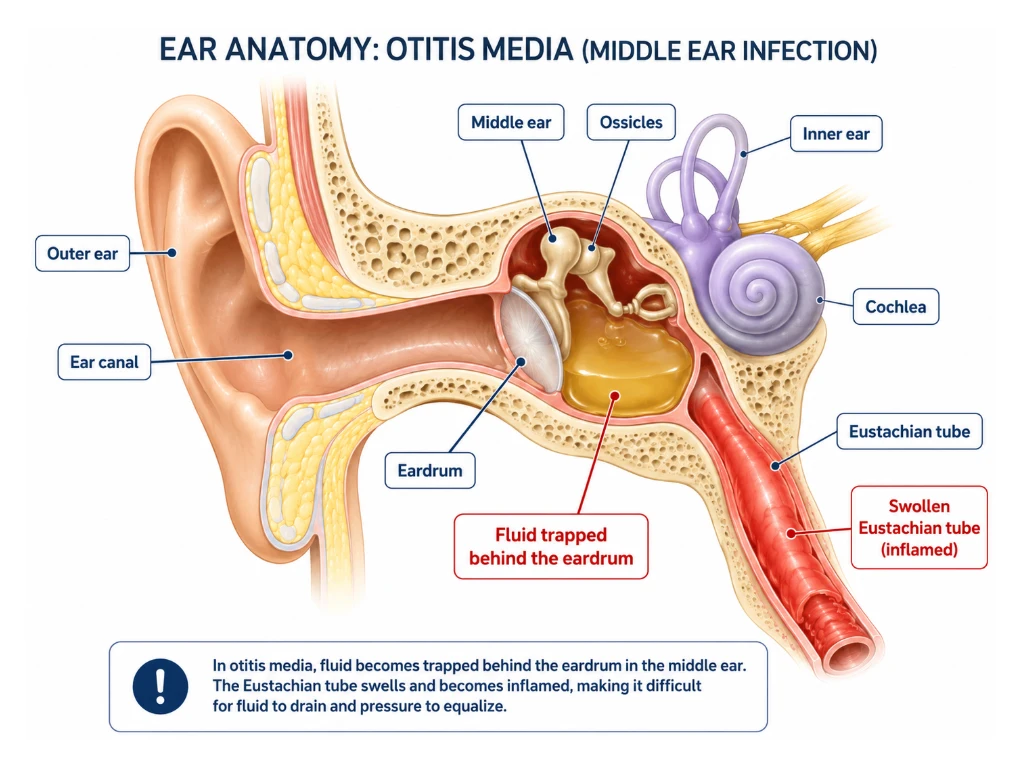
An ear infection happens when part of the ear becomes inflamed or infected. The most common type is a middle ear infection, also called acute otitis media.
The middle ear is a small space behind the eardrum. It is connected to the back of the nose and throat by a narrow passage called the Eustachian tube. This tube helps drain fluid and balance pressure in the ear.
When the Eustachian tube becomes swollen or blocked, fluid may build up behind the eardrum. Viruses or bacteria can then grow in the trapped fluid, causing pain, pressure, and hearing changes.
Types of Ear Infections
Not every ear infection affects the same part of the ear.
1. Middle Ear Infection
A middle ear infection affects the space behind the eardrum. This is the most common type of ear infection and is what many people are referring to when they talk about an "ear infection."
It often happens after a cold or upper respiratory infection. Symptoms may include ear pain, fever, blocked hearing, and a feeling of fullness in the ear.
2. Otitis Media with Effusion
Fluid remains behind the eardrum after an infection has been resolved. Although there may be no active infection, the fluid can affect hearing.
3. Outer Ear Infection
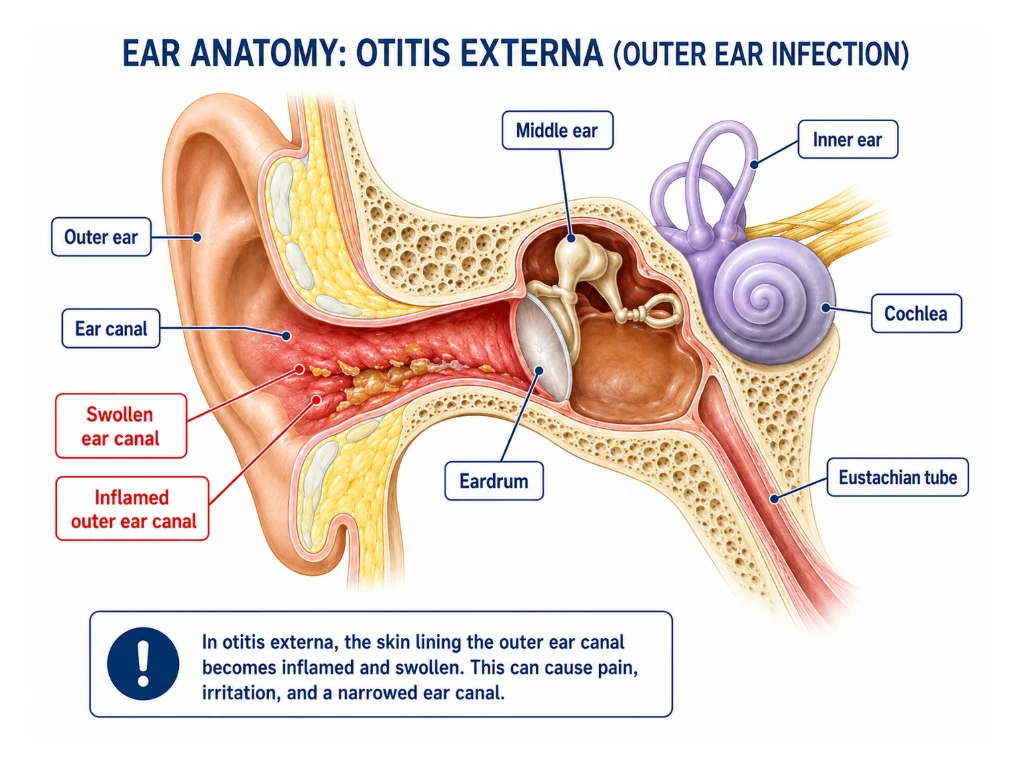
An outer ear infection affects the ear canal. It is sometimes called a swimmer’s ear.
This type of infection may cause pain when touching or pulling the outer ear, itchiness, redness, swelling or discharge from the ear canal and is usually caused by moisture trapped inside the ear.
4. Chronic or Recurrent Ear Infection
Some people get ear infections repeatedly or have fluids that does not clear for a long time.
This may affect hearing, sleep, school performance, or speech development in children. A doctor may recommend hearing checks or referrals to an ear, nose, and throat specialist if infections are frequent or persistent.
Ear Infection Symptoms
Ear infection symptoms can appear suddenly. The symptoms may differ depending on age and the part of the ear affected.
Common symptoms include:
- Ear pain or discomfort
- A blocked or full feeling in the ear
- Muffled hearing
- Fever
- Fluid, pus or blood coming from the ear
- Ringing or buzzing in the ear
- Dizziness or loss of balance
- Headache
- Tiredness or irritability
Why Ear Infections Often Happen After a Cold
Many ear infections begin after a cold, flu, sinus infection, or blocked nose.
When the nose and throat are inflamed, the Eustachian tube can also become swollen. This makes it harder for fluid to drain from the middle ear. The trapped fluid creates an environment where germs can grow.
This is why ear pain may appear a few days after a runny nose, cough, or sore throat. It does not always mean the cold has “moved” to the ear, but the congestion can increase the risk of fluid buildup and infection.
What Causes an Ear Infection?
Ear infections may be caused by viruses or bacteria. Common triggers include:
- Colds and flu
- Sinus infections
- Allergies that cause nasal congestion
- Enlarged adenoids in children
- Exposure to cigarette smoke or poor air quality
- Frequent contact with other children in childcare or school
- Bottle feeding while lying flat
- Weakened immune system
Some common bacteria linked to middle ear infections include Streptococcus pneumoniae, Haemophilus influenzae and Moraxella catarrhalis.
Ear Infection in Children

Children are more likely to get ear infections than adults. This is partly because their Eustachian tubes are shorter, narrower, and more easily blocked. Their immune systems are still developing.
Young children may not be able to explain that their ears hurt. Instead, parents may notice changes in behaviour.
- Tugging or rubbing the ear
- Crying more than usual
- Fussiness or irritability
- Difficulty sleeping
- Poor feeding or reduced appetite
- Fever
- Not responding to sounds as usual
- Trouble with balance
- Fluid coming from the ear
Persistent ear infections may temporarily affect hearing, which can interfere with speech and language development in younger children.
Ear Infection in Adults
Ear infections are less common in adults than in children, but they can still happen.
In adults, ear pain may be linked to a middle ear infection, outer ear infection, sinus congestion, earwax blockage, jaw joint problems, or dental issues. Because several conditions can feel similar, it is important to get the ear examined instead of assuming it is an infection.
How Doctors Diagnose an Ear Infection
A doctor will usually ask about symptoms and examine the ear with an otoscope. This is a lighted instrument used to look at the ear canal and eardrum.
During the examination, the doctor may check for:
- Redness or swelling of the eardrum
- Fluid behind the eardrum
- Bulging of the eardrum
- Discharge in the ear canal
- Signs of a tear in the eardrum
- Earwax blockage or outer ear infection
In some cases, additional tests may be recommended. These may include tympanometry to check how the eardrum moves, a hearing test, or further assessment by an ear, nose, and throat specialist.
Ear Infection Treatment
Treatment depends on the patient's age, symptoms, and severity.
Not every ear infection needs antibiotics. Many mild middle ear infections improve on their own within a few days. However, some cases need medicine or further treatment.
1. Pain Relief
Medications such as paracetamol or ibuprofen help reduce discomfort while the infection is resolved.
2. Watchful Waiting
For mild ear infections, a doctor may recommend monitoring symptoms for a short period before starting antibiotics.
This approach may be suitable when symptoms are mild, the child is older, there are no red flags and follow up is possible.
Watchful waiting does not mean ignoring the infection. It means managing pain, monitoring symptoms closely, and seeking review if symptoms do not improve or become worse.
3. Antibiotics
Antibiotics may be prescribed when an ear infection is more likely to be bacterial or when the risk of complications is higher.
A doctor may consider antibiotics for:
- Babies below 6 months old
- Children with severe ear pain
- Fever of 39°C or higher
- Symptoms lasting more than 48 to 72 hours
- Infection in both ears in younger children
- Ear discharge
- Children or adults with higher medical risk
4. Ear Tubes
Children with recurrent infections or persistent fluid buildup may benefit from tympanostomy tubes to improve drainage and reduce future infections.
When to See a Doctor for an Ear Infection
You should see a doctor if symptoms are severe, persistent, or concerning.
Seek medical advice if there is:
- Ear pain that lasts more than 2 to 3 days
- Fever
- Fluid, pus or blood coming from the ear
- Hearing loss or blocked hearing
- Dizziness or balance problems
- Severe headache
- Swelling, redness or pain behind the ear
- Repeated ear infections
- Symptoms in a baby below 6 months old
- A child who is very drowsy, unusually weak or difficult to comfort
Seek urgent medical care if there is facial weakness, a stiff neck, confusion, severe swelling behind the ear, or a very high fever.
How can ear infections be prevented?
Although not all ear infections are preventable, you can reduce the risk by:
- Practicing good hand hygiene
- Staying up to date with vaccinations
- Avoiding cigarette smoke
- Breastfeeding infants when possible
- Managing allergies
- Treating chronic sinus problems
- Keeping children away from people with respiratory infections when possible
Frequently Asked Questions (FAQ)
Many mild ear infections improve within a few days. Some may take one to two weeks to fully settle, especially if fluid remains behind the eardrum.
Yes, some ear infections improve without antibiotics. However, babies, young children with severe symptoms, adults with persistent pain, and anyone with ear discharge should be reviewed by a doctor.
Repeated ear infections may be linked to Eustachian tube function, frequent colds, childcare exposure, enlarged adenoids, allergies, smoke exposure, or family tendency. A doctor may recommend further checks if infections are frequent.
Ear discharge should be checked, especially if it is pus, blood stained, or has a bad smell. It may be due to a torn eardrum, outer ear infection, or ongoing infection.
An ear infection itself is not usually contagious.
However, the cold, flu or respiratory infection that leads to it can spread from person to person. This is why ear infections may seem to happen after a child has been around others with coughs or colds.
Do not use ear drops without checking if they are suitable. Some drops should not be used if the eardrum is torn.
Most people can fly safely, although take-off and landing may cause increased ear discomfort due to pressure changes. If symptoms are severe, consult your doctor before travelling.
If you have drainage from the ear or a perforated eardrum, avoid swimming until advised otherwise by your doctor. For uncomplicated middle ear infections without ear discharge, swimming is generally not the cause of the infection, but seek medical advice if symptoms persist.
Referrals may be considered for repeated infections, persistent fluid, hearing problems, suspected eardrum damage, balance issues, or complications.
If you or your child has ear pain, blocked hearing, fever or fluid coming from the ear, a medical assessment can help identify the cause and guide suitable treatment.
At Nobel ENT Centre, Dr Leong Hoo Kwong (Senior Consultant ENT Surgeon) provides comprehensive assessment and treatment for ear infections in both children and adults at Gleneagles Hospital. With extensive experience in managing common and complex ear conditions, including recurrent ear infections, hearing loss, and middle ear disorders, he offers personalised, evidence-based care tailored to each patient's needs. Early evaluation can help relieve symptoms, prevent complications, and protect long-term hearing.