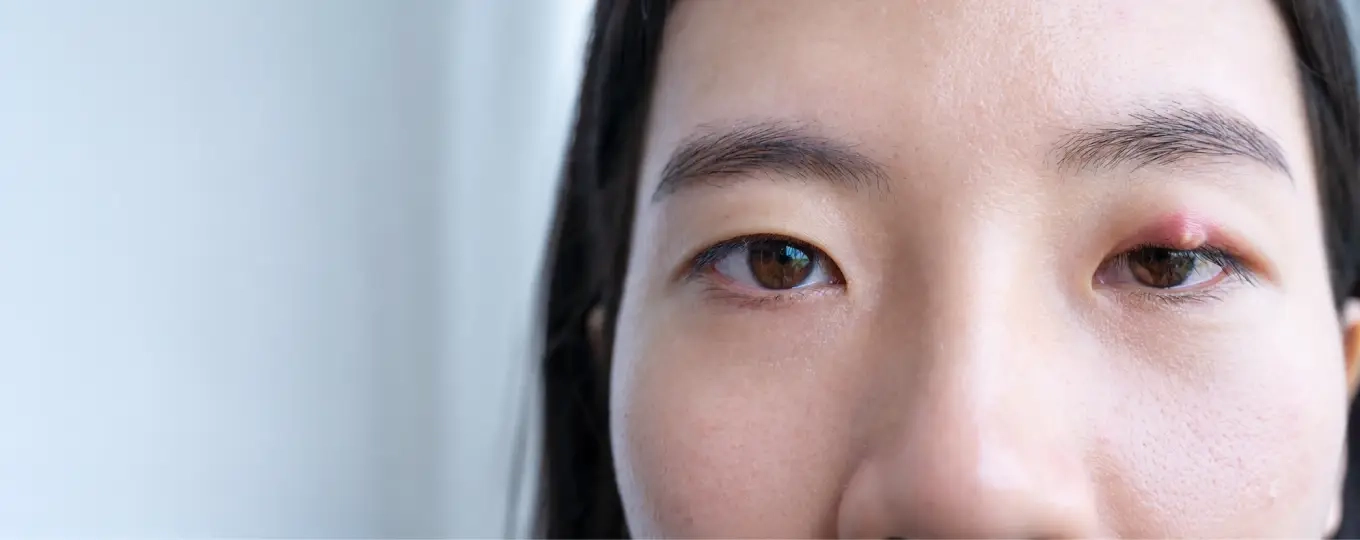
A chalazion is a painless lump on the eyelid caused by a blocked oil gland (meibomian gland). It usually develops gradually, is not infectious, and often improves with simple home treatments such as warm compresses.
Chalazia can occur on the upper or lower eyelids and affect people of all ages. While typically harmless, larger chalazia may cause discomfort or temporarily blur vision.
What Causes a Chalazion to Form?
A chalazion develops when an oil-producing gland in the eyelid becomes blocked, leading to a buildup of oil and inflammation.
Common causes and risk factors include:
Blepharitis
Chronic inflammation of the eyelid margins can block the oil glands and increase the likelihood of chalazia.
Meibomian gland dysfunction
Poor functioning of the oil glands can cause thicker secretions that are more likely to clog the gland openings.
Rosacea
People with rosacea often experience eyelid inflammation and meibomian gland problems.
Seborrheic dermatitis
The skin condition may contribute to gland blockage and recurring eyelid problems.
Previous chalazion
Individuals who have had a chalazion before are more likely to develop another one.
Diabetes
Studies suggest that diabetes may increase the risk of eyelid gland dysfunction and recurrent chalazia.
Poor eyelid hygiene
Accumulation of oil, debris, and dead skin cells around the eyelid may contribute to gland blockage.
What Does a Chalazion Look Like?
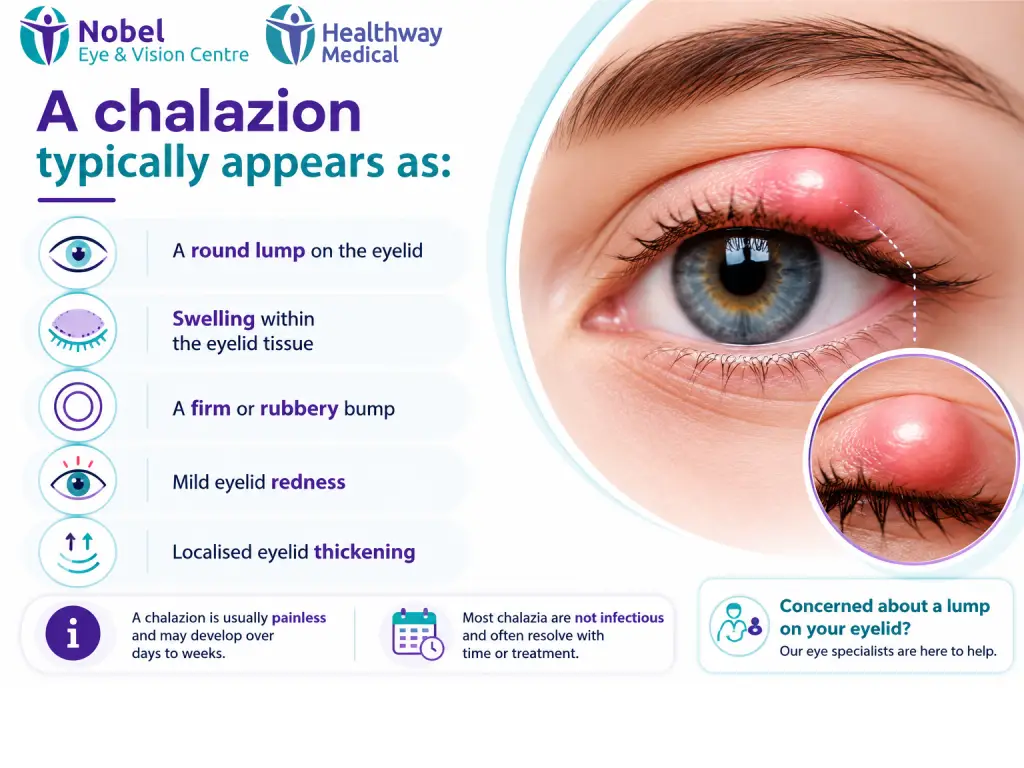
A chalazion typically appear as:
- A round, firm lump on the eyelid
- Swelling within the eyelid tissue
- Mild redness
- Localised thickening of the eyelid
Unlike a stye, a chalazion usually develops gradually over several days or weeks and is often not painful.
In some cases, the lump may remain small and barely noticeable. In others, it can grow larger and cause cosmetic concerns or interfere with vision.
Signs and Symptoms
Symptoms may vary depending on the size and location of the lump.
Common symptoms include:
- A painless eyelid lump
- Eyelid swelling
- Mild tenderness
- Redness around the affected area
- Increased tearing
- Sensitivity to light
- Blurred vision (if the lump becomes large)
- A feeling of pressure on the eyelid
Most chalazia do not cause permanent vision problems.
Chalazion vs Stye: What’s The Difference?
| Feature | Chalazion | Stye (Hordeolum) |
|---|---|---|
| Pain | Usually painless | Painful and tender |
| Cause | Caused by a blocked oil gland | Caused by a bacterial infection |
| Development | Develops slowly | Develops quickly |
A stye may sometimes turn into a chalazion if the infection resolves, but blockage remains.
How Is a Chalazion Diagnosed?
A chalazion is usually diagnosed through a simple eye examination.
The diagnosis is generally based on:
- Appearance of the eyelid lump
- Medical history
- Symptoms experienced
- Examination of the eyelid and surrounding structures
Most cases do not require scans or laboratory tests.
However, if a chalazion keeps recurring in the same location, further evaluation may be needed to rule out rare conditions such as eyelid cancers.
Chalazion Treatment
Many chalazia resolve on their own without medical treatment. Treatment focuses on reducing inflammation and helping the blocked gland drain naturally.
1. Warm Compresses
Apply a clean warm compress to the eyelid
- Duration: 10–15 minutes
- Frequency: 3–6 times daily
- This helps soften the oily secretions and drain the blocked oil.
2. Gentle Eyelid Massage
After using a warm compress, gentle massage may help release the blockage. This should be performed carefully according to your doctor’s advice.
3. Eyelid Hygiene
Maintaining good eyelid hygiene can reduce recurrence.
Methods may include:
- Diluted baby shampoo
- Eyelid cleansing wipes
- Lid scrubs recommended by your doctor
4. Medications
Medication may be prescribed if:
- There is associated inflammation (e.g. blepharitis)
- Infection is suspected
Steroid injections may be used for persistent chalazia.
5. Minor Surgery
If a chalazion:
- Persists for several weeks to months
- Continue to grow
- Causes vision problems
- Fails to respond to conservative treatment
A minor surgical procedure called incision and curettage may be recommended.
This procedure involves draining the contents of the blocked gland.
Can a Chalazion Go Away On Its Own?
Yes. Many chalazia resolve naturally within a few weeks.
However, if the lump does not improve after 1 month, or continues to grow, medical evaluation is recommended.
Can Chalazion Be Prevented?
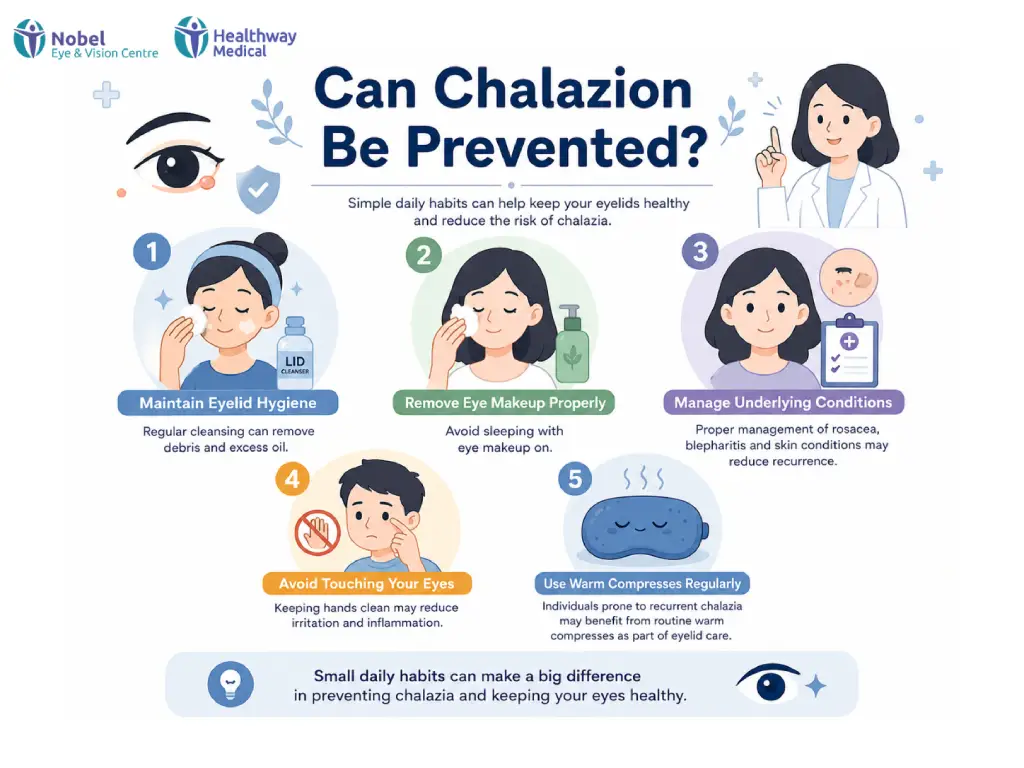
While not all cases can be prevented, you can reduce your risk by:
- Maintaining good eyelid hygiene
- Removing eye makeup thoroughly
- Managing conditions like blepharitis or rosacea
- Avoiding touching or rubbing your eyes
- Cleaning contact lenses properly
When should You See An Eye Doctor?
Seek medical attention if:
- The lump continues growing
- Vision becomes blurred
- Pain develops
- Significant redness occurs
- The eyelid becomes very swollen
- Multiple chalazia occur
- The chalazion keeps returning
- Symptoms do not improve after several weeks
Persistent or recurrent eyelid lumps should always be assessed by an eye specialist.
Book an AppointmentFrequently Asked Questions (FAQ)
No. A chalazion is not contagious and cannot spread from person to person
No. Squeezing or popping a chalazion can worsen inflammation and increase the risk of infection.
Stress does not directly cause a chalazion, but it may worsen underlying conditions that increase risk.
Recurring chalazia may be associated with blepharitis, rosacea, meibomian gland dysfunction, diabetes, or poor eyelid hygiene.
Most chalazia improves within a few weeks. Some may take longer or require treatment.
If your chalazion does not go away, keep recurring, or affects your vision, consult an eye specialist for assessment and treatment.
At Nobel Eye & Vision Centre, Dr. Livia Teo sees patients with chalazion and other eyelid conditions. She has a special interest in eyelid conditions, including chalazion, ptosis (in both children and adults), entropion, epiblepharon, and eyelid tumours. Her expertise also includes ophthalmic plastic and reconstructive surgery of the face and orbit, as well as management of orbital conditions such as thyroid eye disease, fractures, and tumours.
Available at

Nobel Eye & Vision Centre (Gleneagles Hospital)