
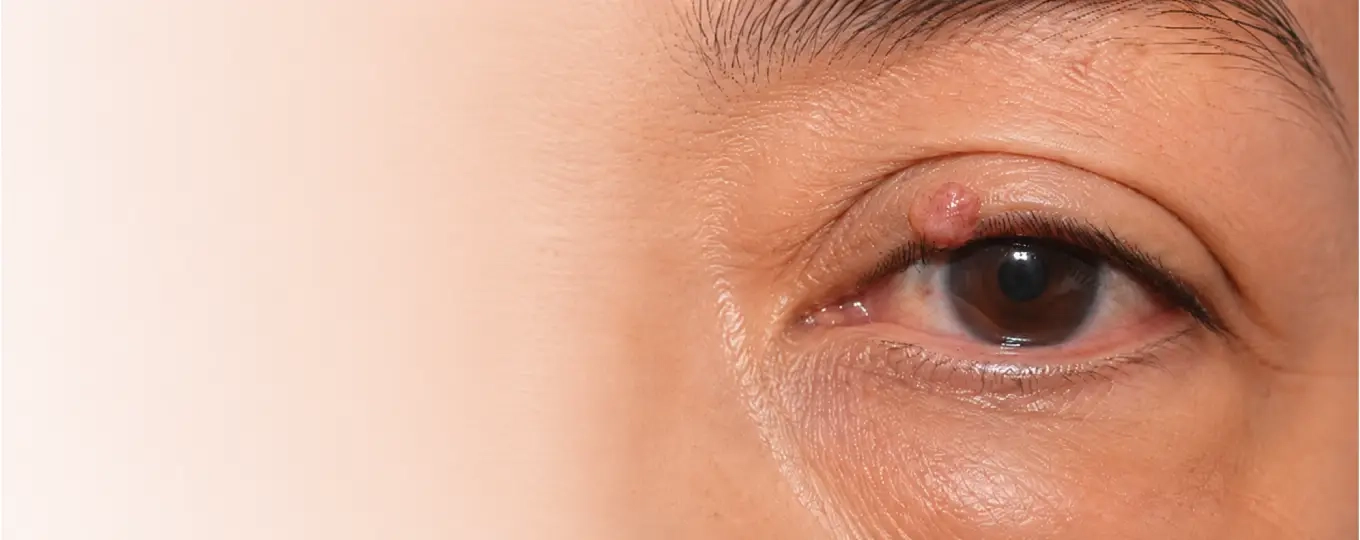
Eyelid tumours are abnormal growths that develop on or within the eyelid. They may arise from the skin, oil glands, sweat glands, hair follicles, or pigment-producing cells.
While the word “tumour” can sound alarming, not all eyelid tumours are cancerous. Many are benign, meaning they do not spread to other parts of the body and may require observation or simple removal. Others may be malignant, meaning they have the potential to invade surrounding tissues and require prompt treatment.
What Causes Eyelid Tumours?
The exact cause depends on the type of tumour, but several risk factors can increase the likelihood of developing one:
Age
Many eyelid tumours occur more frequently in older adults.
Ultraviolet exposure
Long term exposure to sunlight can damage skin cells around the eyelids and contribute to the development of certain tumours.
Genetic factors
Inherited conditions and family history.
Previous skin conditions
Individuals with a history of skin tumours or skin cancer may face a higher risk of developing eyelid lesions.
Immune system suppression
A weakened immune system may increase the likelihood of abnormal cell growth.
Signs & Symptoms of Eyelid Tumours
Symptoms vary depending on the tumour type and location. Common signs include:
- A persistent lump or bump on the eyelid
- A growth that gradually increases in size
- Thickening of the eyelid skin
- Changes in colour or pigmentation
- Crusting, bleeding, or scaling
- Loss of eyelashes in a specific area
- Recurrent swelling in the same location
- Eyelid distortion or irregular shape
- Irritation or discomfort
Some eyelid tumours may not cause noticeable symptoms and are only detected during an eye examination.
Types of Eyelid Tumours
Eyelid tumours are generally classified as either benign or malignant.
1. Benign Eyelid Tumours
Benign eyelid tumours are non-cancerous growths that usually remain localised and do not spread to other parts of the body.
Examples include:
- Papillomas
- Seborrhoeic keratoses
- Epidermal inclusion cysts
- Intradermal naevi (moles)
- Xanthelasma
- Haemangiomas
Although benign tumours do not spread, they may still cause irritation, cosmetic concerns or interfere with vision depending on their size and location.
2. Malignant Eyelid Tumours
Malignant eyelid tumours are cancerous growths that can invade nearby tissues and, in some cases, spread beyond the eyelid.
Common malignant eyelid tumours include:
- Basal cell carcinoma
- Squamous cell carcinoma
- Sebaceous gland carcinoma
- Melanoma
Early diagnosis significantly improves treatment outcomes.
How Do You Differentiate an Eyelid Tumour vs Chalazion & Stye?
Eyelid lumps are often mistaken for common conditions like chalazion or stye.
| Condition | Typical Features |
|---|---|
| Chalazion | Painless, slow-growing lump caused by a blocked oil gland |
| Stye | Painful, red swelling caused by infection |
| Eyelid Tumour | Persistent growth that may continue enlarging or change in appearance |
If a chalazion does not improve after several weeks, further evaluation may be needed.
Treatment for Eyelid Tumours
Treatment depends on:
- Whether the tumour is benign or malignant
- Size and location of the tumour
- Symptoms
- Impact on vision
1. Observation
Some small benign tumours may be monitored over time if they are not causing symptoms.
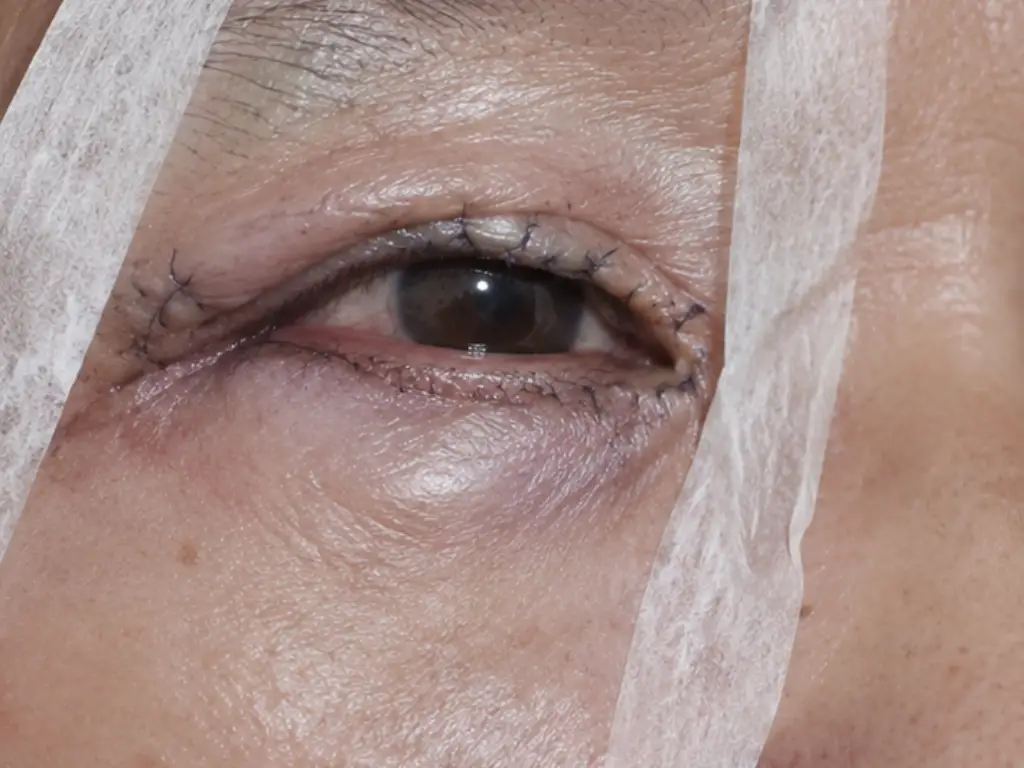
2. Surgical Removal
Surgical excision is one of the most common treatments for eyelid tumours.
Removal may be recommended when a tumour:
- Continues to grow
- Causes discomfort
- Interferes with vision
- Raises concern for malignancy
3. Eyelid Reconstruction
Reconstructive procedures may be required after removal of larger tumours to restore function and appearance.
4. Additional Treatments
Depending on the diagnosis, treatment may also involve:
- Cryotherapy
- Laser treatment
- Radiation therapy
- Targeted medical therapies
- Staging of the tumour if it is malignant
Recovery After Eyelid Tumour Treatment
Recovery varies depending on the procedure.
Most patients experience temporary:
- Swelling
- Bruising
- Mild discomfort
Regular follow-up appointments may be recommended to monitor healing and detect any recurrence.
When You Should See an Eye Specialist
You should consider seeking specialist assessment if you have:
- A lump that does not go away
- A growth that keeps enlarging
- Recurrent swelling in the same area
- Changes in eyelid appearance
- Vision problems
Early evaluation can help determine whether the growth is benign and whether treatment is necessary.
Book an AppointmentAre all eyelid tumours cancerous?
Some benign lesions may remain stable for years, while others may gradually enlarge. A specialist can determine whether observation is appropriate.
A stye is an infection that develops quickly and is often painful, while a tumour is a persistent growth.
Many eyelid tumours can be removed surgically. The exact approach depends on the tumour's size, location, and diagnosis.
It can be difficult to distinguish benign from malignant tumours without medical evaluation. However, warning signs include rapid growth, irregular borders, bleeding or ulceration, loss of eyelashes. If you notice these features, it is important to seek specialist assessment early.
If your eyelid tumours does not go away, keeps recurring, or affects your vision, consult an eye specialist for assessment and treatment.
At Nobel Eye & Vision Centre, Dr. Livia Teo has a special interest in eyelid conditions, including chalazion, ptosis (in both children and adults), entropion, epiblepharon, and eyelid tumours. Her expertise also includes ophthalmic plastic and reconstructive surgery of the face and orbit, as well as management of orbital conditions such as thyroid eye disease, fractures, and tumours.