
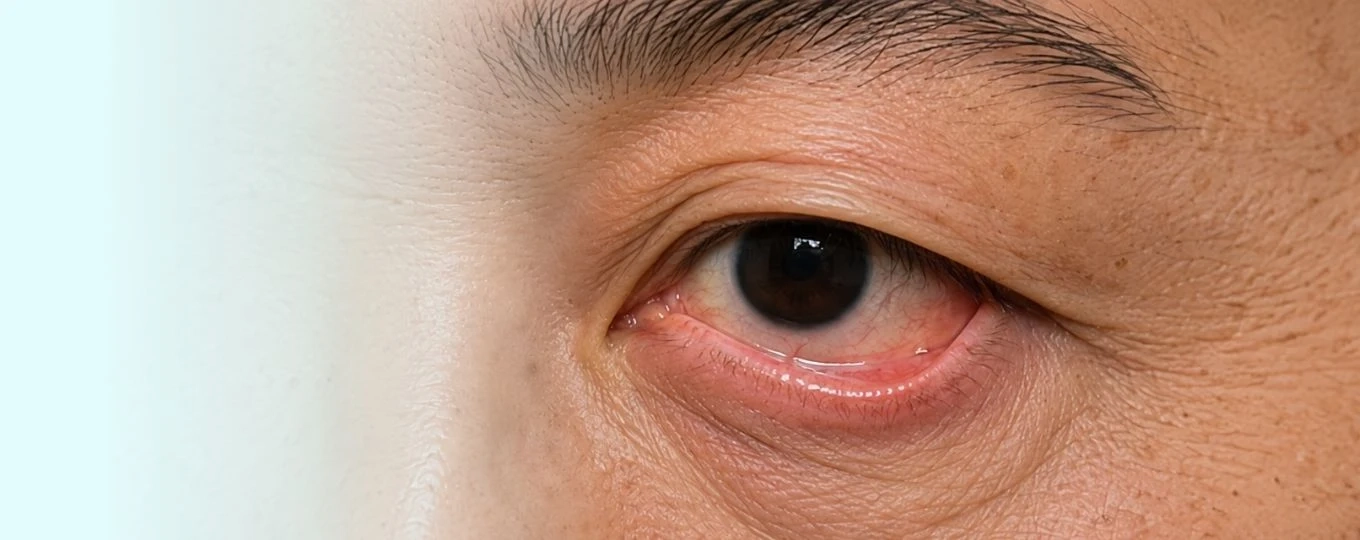
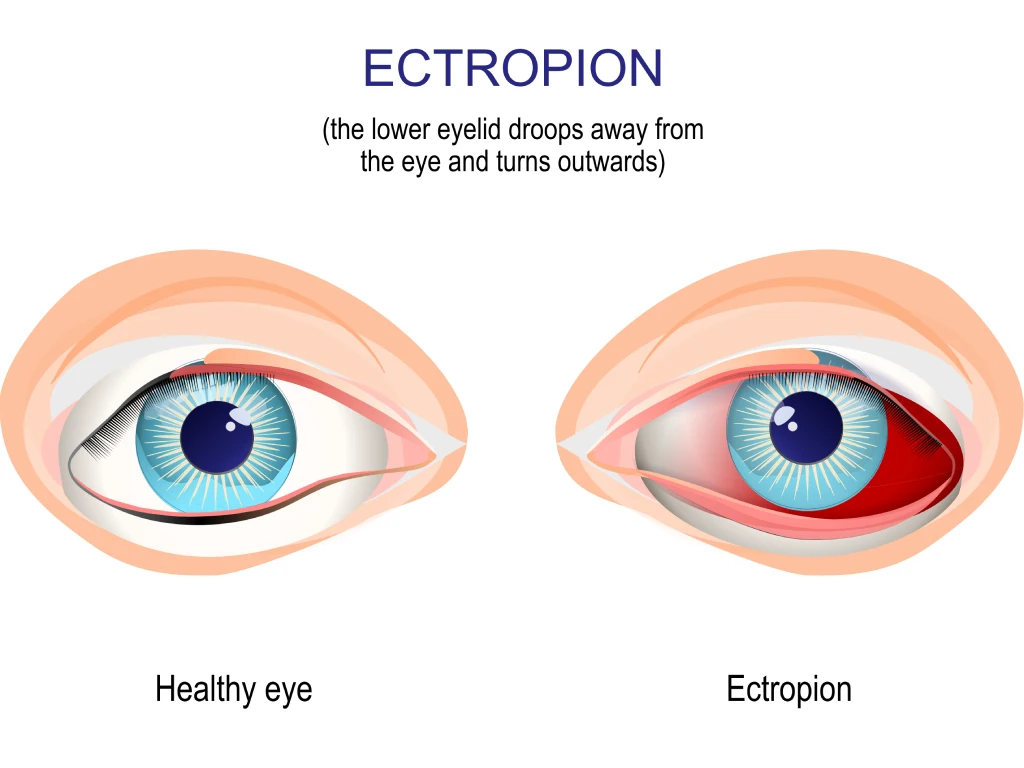
Ectropion occurs when a part, or all, of an eyelid turns outward instead of resting closely against the surface of the eye.
It mainly affects the lower eyelid and may involve just one section of the eyelid or extend along the length of the eyelid. It can also occur in one eye or both eyes.
In normal circumstances, the eyelids protect the surface of the eyes, spread tears while blinking, and help guide tears towards small drainage openings near the inner corner of the eyelids.
However, these essential functions become disrupted when the lower eyelid sags away from the eye. Consequently, the exposed surface of the eye may become dry and irritated while tears may not drain normally and overflow onto the cheek.
What Are the Symptoms of Ectropion?
The symptoms of ectropion develop mainly because the eye becomes more exposed, and the normal tear drainage system no longer works effectively.
Common symptoms can include:
- A lower eyelid that appears loose, droopy or turned outward
- Watery eyes or excessive tearing
- Dry eyes
- A gritty or sandy foreign body sensation
- Burning sensation or irritation
- Redness of the eye
- Redness of the inner eyelid
- Mucous discharge
- Crusting around the eyelashes
- Sensitivity to light
- Difficulty closing the eye completely
The severity of these symptoms can vary according to how much of the eyelid has ‘moved away’ from the eye and whether the cornea has become exposed.
What Causes Ectropion?
There are several causes of ectropion. The underlying reason is generally related to changes in the structures responsible for keeping the eyelid positioned against the eye.
Age-Related Changes
Ageing is the most common cause of ectropion.
As a person gets older, the muscles around the eyes may weaken while the tendons and supporting tissues of the lower eyelid become stretched and loose. Consequently, the eyelid can begin to sag away from the eye.
This form is known as an involutional ectropion.
Facial Nerve Weakness or Paralysis
The facial nerve controls muscles involved in eyelid movement and closure.
Conditions that weaken or paralyse this nerve can reduce support for the lower eyelid muscles and cause it to droop outward. For example, facial nerve weakness associated with Bell's palsy can contribute to ectropion.
This is known as paralytic ectropion.
Scarring and Tightened Skin
Scar tissue can shorten or tighten the skin surrounding the eyelid and pull the lower eyelid away from the eye.
Possible causes include:
- Previous eyelid surgery
- Facial or eyelid injury
- Burns
- Chemical injuries
- Certain inflammatory skin conditions
- Previous treatment affecting the skin surrounding the eye
This form is known as cicatricial ectropion.
Eyelid Growths or Swelling
A lump, tumour, cyst, swelling or mass on the eyelid can become heavy enough to pull the eyelid away from the eye.
This is known as mechanical ectropion.
Congenital Ectropion
Although rare, ectropion may be present at birth.
Congenital ectropion can occur in association with certain conditions affecting facial or eyelid development. However, this form of ectropion is considerably less common than acquired ectropion in adults.
How Is Ectropion Diagnosed?
Ectropion can usually be diagnosed through an examination of the eye and eyelids together with a review of a patient's medical history.
An eye specialist may examine:
- The resting position of the lower eyelid
- How much of the eyelid has turned outward
- Whether the eyelid is loose
- Whether the tear drainage opening remains apposed against the eye
- Whether the eye closes completely during blinking
- Facial movement and facial nerve function
- The surface of the eye for dryness or inflammation
- The cornea for signs of damage
- The surrounding skin for scars or tightness
- Whether an eyelid lump or growth is affecting its position
In many cases, no complex investigation is required because an abnormal eyelid position can be identified during the examination.
How Is Ectropion Managed or Treated?
Treatment for ectropion depends on the cause and how much the eyelid has turned outwards.
For mild cases, treatment may focus on keeping the eye comfortable and protecting it from dryness. This may include:
- Lubricating eye drops to reduce dryness and irritation
- Eye ointment, especially at night, to keep the eye surface moist
- Temporary eyelid taping in selected cases to help the eyelid sit closer to the eye
- Treatment of underlying inflammation or skin conditions if these are contributing to the problem
If ectropion is caused by facial nerve weakness, treatment may also involve managing the underlying nerve condition.
When the eyelid is significantly loose, scarred or persistently turned outwards, eyelid surgery may be recommended. Surgery usually involves tightening or repositioning the eyelid so that it rests more naturally against the eye.
An eye specialist can assess the cause of ectropion and recommend the most suitable treatment based on the severity of the condition.
Ectropion surgery may be recommended when the eyelid continues to turn outward and causes persistent watering, dryness, irritation, recurrent infections or exposes the cornea.
The purpose of surgery is to restore the eyelid to a position where it rests more naturally against the eye. This can improve eyelid closure, tear distribution, and tear drainage while reducing exposure of the eye’s surface.
The recommended procedure depends on the underlying cause of ectropion. For example, age-related ectropion caused by eyelid looseness may require tightening of the lower eyelid. In contrast, ectropion caused by scarred or shortened skin may require additional tissue, such as a skin graft or flap.
Can Ectropion Be Prevented?
Not every case of ectropion can be prevented, particularly when it develops because of age-related changes.
However, several measures may help protect the eyelids and surrounding skin.
These include:
- Avoiding frequent or forceful eye rubbing
- Handling the eyelids gently when inserting or removing contact lenses
- Protecting the eyes and face from injury
- Wearing appropriate eye protection during hazardous activities
- Protecting the skin around the eyes from excessive sun exposure
- Seeking medical attention for significant eyelid injuries or inflammation
These measures cannot guarantee prevention, but they may reduce avoidable stress or damage to eyelid tissues.
When Should You See an Eye Specialist?
Arrange an eye assessment if you notice that your lower eyelid is sagging or turning outward, particularly if you also experience persistent watering, dryness, redness or irritation.
Seek prompt medical attention if you develop:
- Increasing or significant eye pain
- Increasing sensitivity to light
- Reduced or blurred vision
- Severe eye redness
- Increasing difficulty closing the eye
Pain, light sensitivity, and changes in vision may indicate injury to the surface of the eye, including the cornea.
If these symptoms occur, seek prompt assessment with an Ophthalmologist at Nobel Eye & Vision Centre.
Book an AppointmentFrequently Asked Questions (FAQ)
Ectropion is often treatable, with mild cases causing watery eyes and irritation. However, severe ectropion can leave the cornea exposed and increase the risk of inflammation, infection, corneal ulcers, scarring, and reduced vision.
It is unlikely that persistent ectropion caused by age-related loosening or structural changes will resolve on its own. Lubricating eyedrops and other conservative measures may reduce symptoms, while surgery may be considered when permanent correction is required.
Yes. Ectropion may affect one or both eyes, although disease severity may be asymmetrical.
Prolonged exposure of the eye’s surface can cause increased dryness and inflammation. In more severe cases, complications may include corneal scratches, infection, ulcers, scarring, and permanent reduction in vision.
Entropion causes the eyelid to turn inward, while ectropion causes it to turn outward. Both can cause eye irritation, watering, and discomfort.
Yes. Although surgery can correct eyelid position, ectropion may still recur, particularly when underlying ageing, scarring, or facial nerve problems continue to affect the eyelid.
If you notice persistent or sudden ectropion, it is best to consult a doctor experienced in eye conditions. In Singapore, centres such as Nobel Eye & Vision Centre have Ophthalmologists who can provide assessment and treatment for ectropion, a thorough evaluation will determine whether its effects are cosmetic or pose a medical concern.