

Addison's disease, also known as primary adrenal insufficiency, is a rare condition in which the adrenal glands do not produce enough essential hormones, particularly cortisol and aldosterone.
The adrenal glands are small glands located on top of each kidney. They produce hormones that regulate many important functions, including metabolism, blood pressure, immune response, and the body's ability to cope with physical and emotional stress.
When the adrenal glands become damaged, hormone production falls below normal levels. Without adequate treatment, this can affect multiple body systems and may lead to serious complications. However, with lifelong hormone replacement therapy and regular medical follow-up, most people with Addison's disease can live healthy, active lives.
What Do the Adrenal Hormones Do?
1. Cortisol
Cortisol is often called the body's "stress hormone." It helps:
- Respond to physical and emotional stress
- Maintain normal blood sugar levels
- Regulate metabolism
- Control inflammation
- Support immune function
- Maintain normal blood pressure
2. Aldosterone
Aldosterone helps the body:
- Maintain blood pressure
- Balance sodium and potassium levels
- Regulate the body’s fluid balance
- Support normal kidney function
When these hormones are lacking, multiple body systems can be affected.
What Causes Addison’s Disease?
The most common cause in developed countries, including Singapore, is an autoimmune disease.
In autoimmune Addison’s disease, the immune system mistakenly attacks the adrenal glands, gradually reducing their ability to produce hormones.
Other possible causes include:
- Tuberculosis
- HIV-related infections
- Certain fungal infections
- Bleeding that spreads to the adrenal glands
- Rare inherited genetic disorders
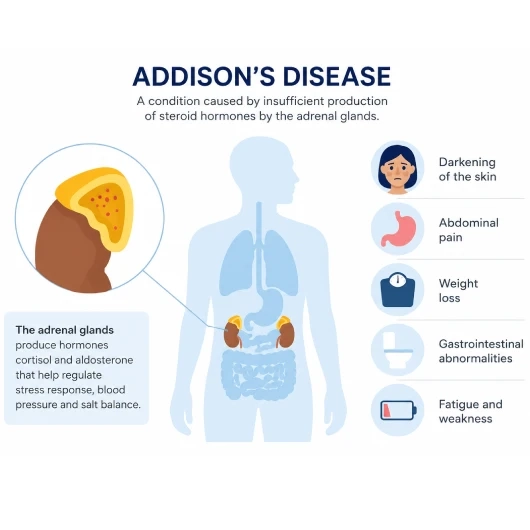
Symptoms of Addison’s Disease
The symptoms of Addison’s disease often develop gradually and may be mistaken for other conditions. Common signs and symptoms include:
- Persistent tiredness and fatigue
- Muscle weakness
- Unexplained weight loss
- Loss of appetite
- Dizziness, especially when standing up
- Low blood pressure
- Craving salty foods
- Nausea, vomiting or abdominal pain
- Diarrhoea
- Low mood, irritability or depression
- Difficulty concentrating
- Darkening of the skin, particularly around scars, knuckles, elbows, knees and skin folds
Women with Addison’s disease may also experience irregular menstrual periods and reduced body hair.
If left untreated, symptoms can worsen and may lead to an adrenal crisis.
What is an Adrenal Crisis?
An adrenal crisis is a medical emergency that occurs when the body suddenly does not have enough cortisol. Characterised by severe weakness, dehydration, confusion, very low blood pressure, and loss of consciousness. Immediate medical attention is required.
How Is Addison’s Disease Diagnosed?
Because its symptoms overlap with many other medical conditions, diagnosing Addison's disease usually requires a combination of clinical assessment and laboratory tests.
Blood Tests
Blood tests can help assess:
- Cortisol levels
- ACTH (adrenocorticotropic hormone)
- Sodium levels
- Potassium levels
- Blood glucose levels
ACTH Stimulation Test
The ACTH stimulation test is considered one of the most important tests for confirming Addison's disease.
A synthetic form of ACTH is administered, and cortisol levels are measured before and after the test. In people with Addison’s disease, cortisol levels typically fail to rise as expected.
Imaging Scans
CT or MRI scans may be recommended to examine the adrenal glands for structural abnormalities such as bleeding, infection, or tumours.
Risk Factors for Addison’s Disease
Although Addison’s disease is uncommon, certain factors may increase your risk of developing the condition, including:
- Having an autoimmune condition, such as type 1 diabetes or autoimmune thyroid disease
- Having a family history of autoimmune diseases
- Tuberculosis or certain infections that affect the adrenal glands
- Cancer that has spread to the adrenal glands
- Certain inherited genetic disorders
Treatment for Addison’s Disease

Addison’s disease is usually a lifelong condition, but it can be effectively managed with hormone replacement therapy.
Treatment aims to replace the hormones that the adrenal glands can no longer produce.
Medications may include:
- Hydrocortisone
- Prednisolone
- Dexamethasone
- Fludrocortisone
Treatment plans are tailored to each individual’s needs and may be adjusted during illness, surgery, or periods of significant stress.
Can Addison’s Disease Be Prevented?
Most cases of Addison's disease cannot be prevented because they result from autoimmune damage to the adrenal glands.
However, early diagnosis and appropriate treatment can help prevent serious complications such as an adrenal crisis.
People living with Addison's disease should:
- Take their medications exactly as prescribed
- Never stop steroid medication suddenly
- Carry medical identification indicating they have Addison's disease
- Follow their doctor's advice on adjusting medication during illness or surgery
- Attend regular follow-up appointments
Recovery and Outlook
Because autoimmune Addison's disease permanently affects the adrenal glands, it cannot usually be cured.
However, with lifelong hormone replacement therapy, regular monitoring, and good medication adherence, most people can enjoy a normal life expectancy and continue working, exercising, travelling, and participating in everyday activities.
When Should You See a Doctor?
You should seek medical advice if you experience symptoms such as:
- Ongoing fatigue without a clear cause
- Unexplained weight loss
- Persistent dizziness
- Low blood pressure
- Salt cravings
- Darkening of the skin
- Recurrent abdominal symptoms
Early diagnosis and treatment can help prevent complications and improve long-term health outcomes.
Book an AppointmentFrequently Asked Questions
Addison's disease is usually a lifelong condition. While it cannot typically be cured, treatment can effectively replace missing hormones and help manage symptoms.
Without treatment, Addison’s disease can become life threatening. However, most people can live normal and active lives with appropriate medical care.
Once treatment is established, many people continue their usual activities, including work, exercise, and travel.
Untreated Addison’s disease can lead to worsening symptoms and may result in an adrenal crisis, which is a medical emergency.
If you have symptoms of Addison’s disease, consult an endocrinologist. At Nobel Diabetes, Thyroid & Endocrine Centre, Dr. Nitish Mishra sees patients with diabetes, thyroid disorders, adrenal and pituitary conditions, osteoporosis, obesity, and other hormone-related disorders. He also manages complex metabolic health issues, providing personalised treatment and long-term care to help patients achieve better health and quality of life.