

Crohn's disease is a chronic inflammatory bowel disease (IBD) that causes damage to the digestive tract.
Unlike other digestive conditions that affect only the surface of the bowel, Crohn’s disease can involve deeper layers of the intestinal wall. It may affect any part of the digestive tract, from the mouth to the anus, although occurrences commonly happen at the end portion of the small intestine and the large intestine (colon).
The inflammation in Crohn's disease is patchy and discontinuous. Healthy sections of the bowel typically lie between inflamed areas. The depth of Crohn’s disease inflammation may vary too, involving the outer surfaces of the gastrointestinal tract to the deeper layers of the bowel wall.
Deep damage to the bowel wall explains why some people with Crohn's disease may develop complications such as narrowing of the bowel, abscesses or abnormal passages known as fistulas.
Crohn’s disease that is active with symptoms and inflammation is called a flare. When the disease is quiet and under control with therapy, it is known as remission.
What Does Crohn’s Disease Feel Like?
Crohn’s disease does not affect everyone in the same way.
For some people, the first sign may be frequent diarrhoea. For others, it may begin with recurring abdominal pain, unexplained tiredness or gradual weight loss.
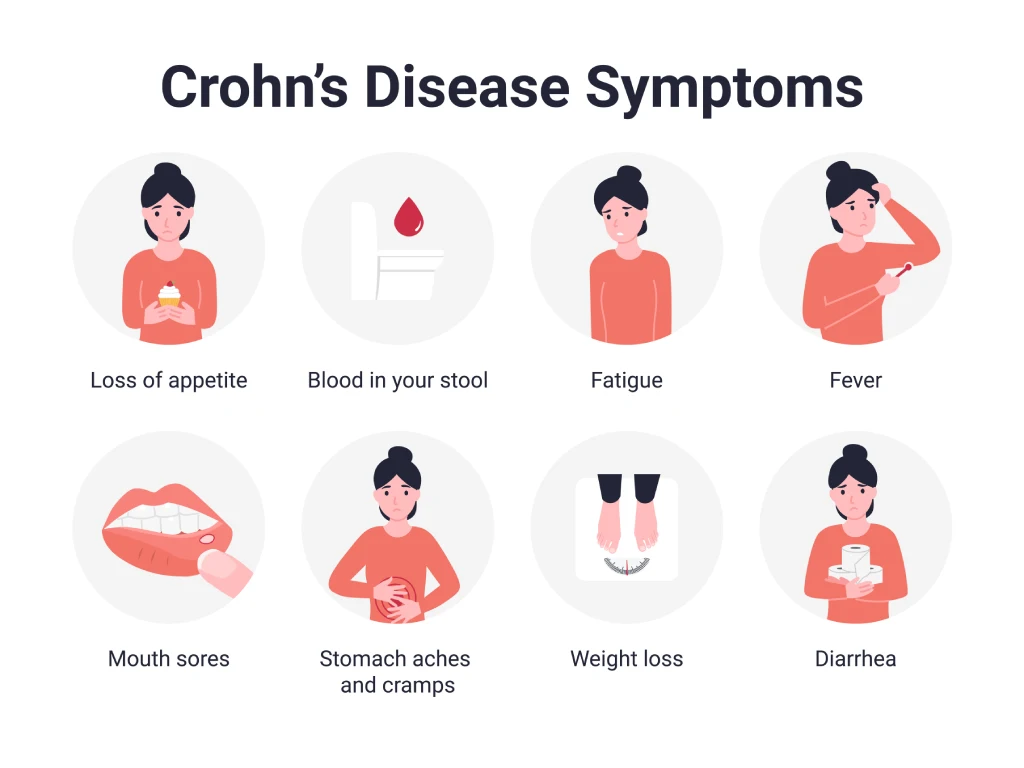
Possible symptoms include:
Crohn’s disease may also cause problems outside the digestive system, including joint pain, skin changes and inflammation of the eyes. These always occur together with bowel or intestinal disease and never alone without involving the gut.
Having one of these symptoms does not automatically mean you have Crohn’s disease. What matters is the overall pattern, how long the symptoms have lasted and whether there are signs of inflammation or other underlying issues.
When Should Abdominal Pain Be Investigated?
Abdominal pain is common, but recurring or persistent symptoms may require a closer look.
The location of abdominal pain can provide useful clues, but it rarely gives the full answer on its own. A gastroenterologist will usually look at the bigger picture by asking questions such as:
- Where exactly is the pain?
- Does it come before or after meals?
- Does it improve after passing stool?
- Does it wake you at night?
- Is it accompanied by diarrhoea, bleeding or fever?
- Have you lost weight?
- Have your bowel habits changed?
- Have you recently travelled or taken antibiotics?
- Is there a family history of inflammatory bowel disease?
These questions can narrow down the possible causes and decide which investigations may be useful.
Abdominal pain deserves closer attention when it keeps recurring, lasts for weeks, wakes you from sleep or occurs together with persistent diarrhoea, bleeding, fever or weight loss.
It does not always point to Crohn’s disease. Similar symptoms can arise from bowel infections, irritable bowel syndrome, coeliac disease, ulcerative colitis, drug related ulcers and other digestive conditions.
The role of a gastroenterologist is therefore not simply to treat “abdominal pain”, but to work out why the pain happens and if there is a condition requiring specific treatment.
How Is Crohn’s Disease Different from IBS?
Crohn’s disease and irritable bowel syndrome can both cause abdominal pain and changes in bowel habits, but they are not the same condition.
- ✓ Crohn’s disease is an inflammatory condition where the immune system causes ongoing inflammation in the digestive tract. Over time, inflammation can cause bowel damage.
- ✓ IBS affects how the bowel functions and can cause symptoms such as abdominal discomfort, bloating and changes in stool patterns, but it does not cause visible bowel inflammation or damage.
Symptoms that necessitate investigation beyond IBS include:
- Blood or mucus in stool
- Unexplained weight loss
- Fever
- Anaemia
- Symptoms that wake you at night
- Persistent diarrhoea
Food poisoning, IBS and inflammatory bowel disease may share symptoms such as abdominal pain and diarrhoea. However, IBD tends to have a prolonged pattern and may be associated with blood or mucus in the stool.
Tests are needed when symptoms or warning signs render the cause uncertain.
What Tests May Be Used to Check for Crohn’s Disease?
The tests recommended depend on your symptoms.
1. Blood Tests
Blood tests may be used to check for:
- Anaemia
- Signs of inflammation
- Infection
- Low iron or vitamin levels
A normal blood test does not exclude Crohn’s disease. Tests that a gastroenterologist may order when Crohn's disease is suspected are the Anti-Saccharomyces cerevisiae antibodies, C-reactive protein, ESR, full blood counts, iron, B12, folate and liver function tests. Often tests for tuberculosis and hepatitis B are requested as the treatment for Crohn's disease may be influenced by the presence or absence of these conditions.
Some patients have mild inflammation limited to a smaller area of the bowel, which may not significantly affect blood markers.
2. Stool Tests
A stool sample may be checked for infection, bleeding or signs of bowel inflammation.
A test that is often used is the faecal calprotectin. This measures a protein released when there is inflammation in the intestines. An elevated level may suggests that inflammation is present, but it does not confirm the diagnosis of Crohn’s disease. It is used to determine the response to treatment after medicines are started.
Infection and other inflammatory conditions may also raise its level. Other stool tests that are done include stool GI PCR multiplex panel assay and tests for clostridium difficile infection.
3. Colonoscopy
A colonoscopy is an essential test when Crohn’s disease is suspected.
During a colonoscopy, a gastroenterologist uses a thin, flexible camera to examine the lining of the large intestine and the end portion of the small intestine. Small tissue samples, known as biopsies, are collected for further analysis.
A colonoscopy can help the doctor to assess:
- Which areas are inflamed
- Whether inflammation appears in separate patches
- Whether ulcers are present
- Which part of the bowel has narrowed (strictures)
- Whether the findings resemble Crohn’s disease or another condition
4. Capsule Endoscopy

Capsule endoscopy involves swallowing a pill containing a small video camera. The camera takes images as it moves through the digestive tract. Capsule endoscopy is the best test for the small intestine, but it is not suitable for all patients with Crohn's disease. A narrowing in the small intestine may render the test unsuitable as the pill may not pass through the area. A gastroenterologist will be able to assess if this test is required and safe.
5. MRI Enterography
Crohn’s disease often involves the small intestine, which is too deep within the body to be examined by a colonoscopy.
An MRI enterography is be used to examine the small bowel and the tissues around it. It can identify inflammation, narrowing, abscesses or fistulas beyond the reach of the endoscope.
Why Does the Location of Crohn’s Disease Matter?
Crohn's disease can affect different parts of the digestive tract. Where the inflammation occurs, often influences the symptoms you may experience, the tests that you need and the treatment recommended.
| Where Crohn's disease occurs | What you may experience | Why it matters |
|---|---|---|
| Small intestine | Abdominal pain, weight loss, anaemia, fatigue or nutritional deficiencies | May require enterography or capsule endoscopy. Balloon enteroscopy may be needed to get tissue samples. |
| Large intestine (Colon) | Persistent diarrhoea, urgency, blood or mucus in the stool | A colonoscopy is needed to assess inflammation and obtain biopsies. |
| Around the anus (Perianal Crohn's disease) | Pain, swelling, abscesses, fistulas or discharge with pus | These symptoms may appear before bowel symptoms and often require early specialist assessment. |
Understanding where inflammation is located helps your gastroenterologist choose the most appropriate investigations, recommend suitable treatment and monitor your condition more effectively.
How Is Crohn’s Disease Treated?
Treatment is not based on symptoms alone.
Before recommending treatment, the gastroenterologist will consider:
- Where the inflammation is located
- How active and severe the disease is
- Whether there is bowel narrowing or complications beyond the digestive tract
- Whether the patient has failed other treatments in the past
- Side effects of treatment
- Route of administration
- The patient’s preferences and day to day needs
Treatment aims to control inflammation, reduce symptoms, support healing of the bowel and lower the risk of future complications.
There are many treatments available for inflammatory bowel disease. Some are tablets and some are injections. Injections may be self-administered at home or as an infusion during a short day admission to the hospital. Some medicines require daily dosing, whilst others may be given only once every 2 months.
Drugs include therapies such as infliximab, adalimumab (e.g. Humira, Amgevita), Ustekinumab (e.g. Stelara, Steqeyma), upadacitinib (e.g. Rinvoq), vedolizumab (e.g. Entyvio), risankizumab (e.g. Skyrizi), guselkumab (e.g. tremfya), amongst others. Treatment is always personalised to the individual and many factors are considered before selecting the most suitable one.
When Should You See a Gastroenterologist?
You should consider consulting a gastroenterologist if you experience:
- Abdominal pain that keeps returning
- Diarrhoea lasting more than a few weeks
- Blood or mucus in the stool
- Unexplained weight loss
- Ongoing lethargy or anaemia
- Pain, swelling or discharge around the anus
- Bowel symptoms that wake you at night
- Symptoms that continue despite initial treatment
Seek urgent medical attention if you develop severe abdominal pain, repeated vomiting, marked abdominal swelling, rectal bleeding, fainting, high fever or an inability to pass stool or gas.
Book an AppointmentFrequently Asked Questions (FAQ)
Yes. Some people experience abdominal pain, diarrhoea, weight loss, tiredness or anaemia without seeing blood.
This is more likely when the disease affects the small intestine rather than the colon.
Early symptoms can look similar, particularly when diarrhoea and abdominal pain begin suddenly.
Food poisoning is generally short lived, while inflammatory bowel disease is more likely to cause a prolonged pattern. Blood, mucus, weight loss or symptoms that continue beyond the expected recovery period may require further assessment.
A colonoscopy is commonly used because this is the area that is commonly affected by Crohn's disease. It allows the doctor to examine the colon, view part of the small intestine and take biopsies. Hence, all patients with Crohn's disease will require a colonoscopy.
The full assessment depends on where the disease is suspected. Some patients may also require additional stool tests, scans and examination of the small bowel.
There is currently no cure, but treatment can reduce inflammation, control symptoms and help patients remain in remission.
In deep remission, many people continue working, travelling, taking part in their usual activities and living normal lives.
Not everyone with Crohn’s disease needs to avoid fibre.
During a flare, or when there is significant bowel narrowing, high fibre foods may worsen pain or cause obstruction of the bowels. At other times, unnecessary restriction may make it harder to maintain a balanced diet.
Dietary advice is based on the location and behaviour of the disease as well as the patient’s individual tolerance.
Symptoms and inflammation do not always occur together.
Some people with Crohn’s disease may continue to experience abdominal pain, diarrhoea or bowel changes even when inflammation appears controlled. Further assessment can help determine whether symptoms are due to active inflammation or another cause.
Crohn’s disease is usually assessed and managed by a gastroenterologist, a doctor who specialises in conditions affecting the digestive system.
Dr Eric Wee is a Senior Consultant Gastroenterologist at Nobel Gastroenterology Centre, located at Mount Elizabeth Novena. He has more than 20 years of clinical experience. Dr Eric Wee completed an advanced endoscopy fellowship at the Asian Institute of Gastroenterology and an attachment with the Mayo Clinic, USA. He had previously served as the head of a gastroenterology division at a restructured hospital and provided visiting consultant services at several hospitals in Singapore.
At Nobel Gastroenterology Centre, Dr Wee assesses digestive and bowel concerns including abdominal pain, persistent diarrhoea and changes in stool. Available services include gastroscopy, colonoscopy, capsule endoscopy, gastrointestinal function tests and abdominal scans.
For a patient with Crohn’s disease, the consultation is not only about confirming the diagnosis. It is about understanding the symptoms, deciding which parts of the digestive tract need to be examined and identifying an appropriate path forward.
Given the plethora of treatment options available, selecting the most appropriate therapy for a patient requires experience. A treatment plan should be personalised and tailored to the individual.