

Diarrhoea refers to the passing of loose, watery stools more frequently than usual.
For some people, this means going to the toilet three or more times in a day. For others, even two loose bowel movements may represent a noticeable change from their normal routine.
This is why frequency alone does not tell the full story. During a consultation, a gastroenterologist will ask the following questions:
- How loose or watery the stools are
- How long the problem has persisted
- Whether it started suddenly or gradually
- Whether there is urgency or loss of bowel control
- Whether the symptoms occur after meals or during the night
- Whether blood, mucus, oil or undigested food is present
- Whether there is abdominal pain, fever or weight loss
How Is Diarrhoea Classified?
Diarrhoea is usually described according to how long it lasts:
- Acute diarrhoea begins suddenly and generally lasts for less than two weeks. This is usually managed by primary care doctors.
- Persistent diarrhoea lasts between two and four weeks. This may require further specialist evaluation.
- Chronic diarrhoea continues for four weeks or longer. This often needs a specialist evaluation because it is unlikely to resolve by itself.
The duration provides an important clue. Sudden diarrhoea is often related to infection, while symptoms lasting for several weeks may require investigation for a wider range of digestive conditions.
Associated alarming features may also prompt further detailed evaluation, such as seeing blood in the stools, weight loss or severe abdominal pain.
What Causes Diarrhoea?
Diarrhoea has many possible causes. Some are temporary, while others require long term treatment.
Common possibilities include:
1. Infections
Viruses, bacteria and parasites can cause diarrhoea, especially after consuming contaminated food or water. In Singapore, these could be infections such as E. coli, Salmonella, Shigella, Campylobacter, Plesiomonas shigelloides, Blastocystis hominis, amongst others. Viral infections like the Rotavirus and Norovirus can be very contagious, spreading easily from a sick person to family and friends.
2. Medicines
Diarrhoea may occur after taking certain medicines, including antibiotics, some diabetes medicines, magnesium containing products and laxatives.
Antibiotics can alter the balance of bacteria in the bowel. Mild antibiotic associated diarrhoea may begin within hours or days of starting treatment.
3. Food Intolerance
Some people have difficulty digesting certain foods, such as lactose in dairy products or carbohydrates like fructose. Consuming such foods can trigger symptoms such as diarrhoea, bloating, wind and abdominal discomfort. This often happens soon after the food is consumed.
4. Irritable Bowel Syndrome
Irritable bowel syndrome or IBS, is abdominal pain that is associated with diarrhoea, constipation or a mixture of both. It is a chronic condition and can cause major disruptions to one’s life.
IBS does not cause the same visible inflammation or bowel damage as seen in inflammatory bowel disease. However, its symptoms do overlap with inflammatory bowel disease. Both of these conditions are often mistaken for the other. Hence, tests by a Gastroenterologist are required to clinch the correct diagnosis.
5. Inflammatory Bowel Disease
Crohn’s disease and ulcerative colitis may cause prolonged diarrhoea and abdominal pain, changes in the bowel pattern, bowel urgency, lethargy and weight loss.
Gastroenterologist Dr Eric Wee explains that food poisoning, IBS and inflammatory bowel disease may all cause abdominal pain and diarrhoea. However, inflammatory bowel disease often has a longer history and may be associated with the presence of blood and mucus in the stool. Inflammatory bowel disease should be identified as early as possible, because it prevents progression of the disease which may result in narrowing of the bowel, perforations (damage to the integrity of the intestines), severe bleeding, and even colon cancer.
6. Poor Absorption of Food
Conditions affecting the small intestine, pancreas or bile acids may prevent food and nutrients from being absorbed properly.
This may result in persistent diarrhoea, weight loss or cause stools that appear pale, oily and difficult to flush.
7. Colon Cancer
When there is a change in the bowel pattern that cannot be explained by a bout of food poisoning, one may need to exclude a bowel or colon cancer. The risk increases with age. Those above 50 years of age have a much higher risk of colon cancer than those who are younger. The American Cancer Society (ACS) and the U.S. Preventive Services Task Force (USPSTF) recommend screening for colon cancer to start at 45 years old. This is a reduction from the standard criteria of screening at 50 years old because the incidence of colon cancer in younger adults is rising. Colon cancer may be associated with blood in the stools, abdominal pain and weight loss. A colonoscopy by the Gastroenterologist is needed to assess the large intestine.
A long list of possibilities does not mean that every patient requires every available test. Investigations should be guided by the symptoms and likely causes. An experienced Gastroenterologist will be able to figure out the tests that are needed.
What Does the Pattern of Diarrhoea Tell a Gastroenterologist?
Two patients may report that they suffer from diarrhoea, but require different assessments. This is because the Gastroenterologist will assess for associated symptoms and risk factors. Based on the information collated, the management plan will be formulated. The following queries may be made.
1. When Did It Commence? Did It Begin Suddenly?
Diarrhoea that starts abruptly, particularly with vomiting, fever or a positive contact history with ill family members, may suggest an infection.
The Gastroenterologist may ask about recent meals, travel history, sick contacts and antibiotic consumption.
2. Does It Happen After Particular Foods?
Symptoms that present after the consumption of dairy products, sweeteners or specific meals may point towards a food intolerance or difficulties digesting carbohydrates.
The relationship is not always straightforward, as multiple food intolerances may be present simultaneously. Keeping a brief diary of meals and symptoms may be of value in highlighting the triggering foods.
3. Does It Wake You Up At Night?
Diarrhoea that wakes a person up from sleep deserves much closer attention.
This pattern is less common and is unlikely to be related to stress or anxiety. It will prompt the Gastroenterologist to look for inflammation, infection, medication effects or another physical cause.
4. Is There Blood or Mucus?
Blood may come from haemorrhoids or a tear near the anus (anal fissure), but it can also be associated with inflammation, infection or cancer.
Mucus may occur with several digestive problems. When it appears together with prolonged diarrhoea, abdominal pain or bleeding, further assessment is appropriate.
5. Are the Stools Oily or Difficult to Flush?
Greasy, pale or floating stools may suggest that fat is not being absorbed normally.
This differs from watery diarrhoea and may lead the doctor to consider the small intestine, pancreas and biliary system.
6. Is There Urgency but Only a Small Amount of Stool?
Frequent urgency with small bowel movements may suggest that the lower part of the colon or rectum is irritated, inflamed or blocked by a cancerous narrowing (colon cancer).
In contrast, passing large volumes of watery stool may suggest a different process.
These details are often more helpful than simply counting the number of trips to the toilet.
What Tests Might Be Needed for Diarrhoea?
Not everyone with diarrhoea needs extensive testing. Many episodes, especially those caused by viral infections, improve on their own. However, if your symptoms are severe, recurrent, prolonged or are accompanied by warning signs, your Gastroenterologist will recommend further investigations to identify the underlying cause.
1. Blood Tests
Blood tests may be used to look for:
- Anaemia
- Infection or inflammation
- Dehydration
- Abnormalities in electrolytes and kidney function
- Thyroid problems
- Nutritional deficiencies
- Coeliac disease
Blood results may support the investigation, but they do not always identify the exact cause by themselves.
2. Stool Tests
A stool sample may be tested for:
- Bacteria, parasites and viruses
- Blood
- Signs of intestinal inflammation
The tests selected may depend on whether the diarrhoea began after travel, antibiotics or suspected food poisoning.
A raised stool inflammation marker (calprotectin) can suggest that further assessment is needed, but it does not confirm Crohn’s disease or Ulcerative Colitis on its own.
3. Colonoscopy
A colonoscopy allows the gastroenterologist to inspect the colon and the end of the small intestine (ileum). This is the best test to screen the colon and it is routinely done by Gastroenterologists in Singapore. As it is an invasive procedure, there are certain criteria that needs to be met, before it can be recommended.
It may be considered when there is:
- Persistent or unexplained diarrhoea
- Blood in the stool
- Concerns about inflammatory bowel disease
- Unexplained weight loss or anaemia
- Abnormal stool or blood test findings
- Change in bowel pattern
- Assessment for colon cancer
Small tissue samples may be important even when the bowel looks normal during the procedure. Conditions, such as microscopic colitis, may only be identified when biopsies are examined under a microscope.
4. Gastroscopy
If your symptoms suggest that the problem may be higher up in the digestive tract, additional tests may be recommended. Depending on your symptoms and initial test results, these may include a gastroscopy, imaging scans, or investigations that assess the small intestine. It is not uncommon for individuals with a serious gastric problem to present with a change in their bowel habit as well. Often people report having to empty their bowels each time they have a meal. This due to an overactive gastrocolic reflex.
Can a Normal Colonoscopy Explain Persistent Diarrhoea?
Some conditions do not cause visible changes to the lining of the bowel, while other conditions affect parts of the digestive tract that are beyond the limits of a colonoscopy.
For example, persistent diarrhoea may be caused by:
- Disorders affecting the small intestine rather than the colon
- Problems with digestion or nutrient absorption
- Bile acid diarrhoea
- Medication side effects or food intolerances
- Functional bowel disorders, such as irritable bowel syndrome (IBS)
A Gastroenterologist will review medications, arrange blood or stool tests, assess the small intestine or consider conditions affecting digestion and absorption.
How Is Diarrhoea Treated?
The right treatment depends on what's causing your diarrhoea. This is why it's important to identify the underlying cause rather than trying to stop the diarrhoea with medication.
Treatment may involve:
- Replacing fluids and electrolytes
- Treating a bacterial or parasitic infection
- Changing a medicine that may be contributing to the diarrhoea
- Managing inflammatory bowel disease
- Adjusting the diet
- Treating bile acid related diarrhoea with medicines
- Managing IBS when inflammation and other causes have been excluded
Many episodes of acute diarrhoea improve on their own with rest and adequate hydration. Antibiotics are only recommended for specific bacterial or parasitic infections and are not effective against viral gastroenteritis. In some cases, unnecessary antibiotics may even disrupt the normal balance of bacteria in the gut.
If you have a high fever, blood in your stools, or severe abdominal pain, it's best to seek medical advice rather than to self-medicate, as these symptoms may indicate a serious underlying condition.
What Should You Eat and Drink During Diarrhoea?
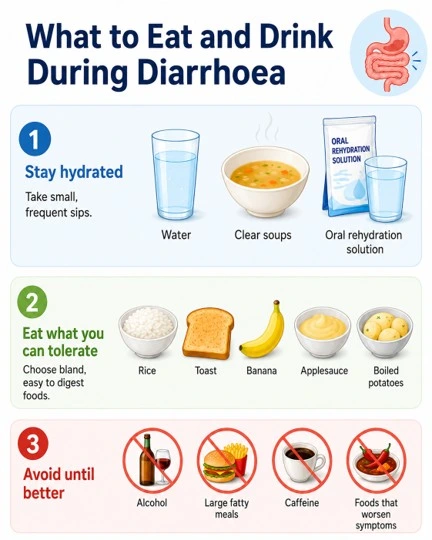
The most important thing when you have diarrhoea is to stay hydrated. If drinking a full glass of water feels difficult, try taking small, frequent sips instead. Water, clear soups and oral rehydration solutions can help to replace the fluids that you've lost.
Eat according to your appetite. Bland, easy to tolerate foods may feel more comfortable.
Alcohol, large fatty meals, dairy, caffeine and chilli should be avoided until the diarrhoea settles.
Why Might Diarrhoea Continue After an Infection Has Cleared?
It's not uncommon for diarrhoea or abdominal discomfort to continue even after a stomach infection has cleared. This doesn't mean that infection is still present. In many cases, the bowel takes time to recover.
Persistent symptoms may be caused by:
- Transient difficulties in digesting lactose
- Changes in the gut bacteria
- Increased sensitivity of the bowel
- Post infectious Irritable Bowel Syndrome
- An infection that is not completely eradicated
Ongoing symptoms don't always mean that the infection is still present. A Gastroenterologist can assess whether further tests are needed or whether your bowel is taking a longer time to recover. This is important because a second course of antibiotics may not help, if the infection is already cleared.
When Should You See a Gastroenterologist?
You could see a Gastroenterologist if your diarrhoea:
- Lasts for more than two to four weeks
- Keeps returning without a clear explanation
- Wakes you repeatedly during the night
- Contains blood or mucus
- Is accompanied by weight loss or anaemia
- Begins after antibiotics and does not settle
- Continues after overseas travel
- Occurs with persistent abdominal pain
- Affects your ability to eat, work, sleep or leave home
- Has not improved with initial treatment
Seek prompt medical attention if diarrhoea is accompanied by severe abdominal or rectal pain, blood-stained stools, high fever, repeated vomiting, fainting or signs of dehydration such as very dark urine, infrequent urination, marked thirst or dizziness.
Frequently Asked Questions (FAQ)
Diarrhoea is usually recognised by a noticeable change from your normal bowel habits. While it is commonly defined as passing loose or watery stools three or more times a day, the number alone doesn't tell the whole story. If your stools are much looser, more frequent, or more urgent than what is normal for you, it may still be considered diarrhoea, even if it happens fewer than three times a day.
Eating naturally triggers movement in the colon. In some people, this response is stronger, particularly when the bowel is sensitive.
Diarrhoea after meals may also be associated with infection, IBS, food intolerance, bile acid diarrhoea or other digestive conditions.
Stress can affect bowel movement and may worsen urgency or loose stools, particularly in people with IBS.
However, persistent diarrhoea should not automatically be attributed to stress. Infection, inflammation, medication effects and other digestive causes may need to be considered.
Antibiotics are only helpful for bacterial or parasitic infections. They do not treat viral infections and may themselves cause diarrhoea.
Yes. Long term diarrhoea may reduce food intake or interfere with the absorption of nutrients. Depending on the cause, this may contribute to deficiencies, anaemia, weight loss or weakness.
Yes. Significant diarrhoea causes the body to lose both fluid and salts. Plain water helps replace fluid, but an oral rehydration solution may be useful when losses are greater.
Diarrhoea that is prolonged, recurring or accompanied by warning signs may be assessed by a Gastroenterologist - a doctor specialising in digestive and bowel conditions.
Dr Eric Wee is a Senior Consultant Gastroenterologist at Nobel Gastroenterology Centre, Mount Elizabeth Novena (Singapore), with more than 20 years of clinical experience. His practice includes the assessment of digestive and bowel problems.
At Nobel Gastroenterology Centre, our approach to diarrhoea begins by understanding how the patient's bowel habits have changed and what that pattern may be telling us.
Depending on the findings, assessment may include blood tests, stool investigations, gastroscopy, colonoscopy, capsule endoscopy, gastrointestinal function tests or abdominal imaging. Nobel Gastroenterology Centre provides consultations and treatment for digestive, bowel and liver problems, including bowel and stool disorders.
Our Specialist

Dr Eric Wee
Senior Consultant Gastroenterologist Dr Eric Wee, Senior Consultant Gastroenterologist, specializes in digestive and liver diseases. He has 20+ years of experience in gastroscopies, colonoscopies, and advanced endoscopic procedures.