
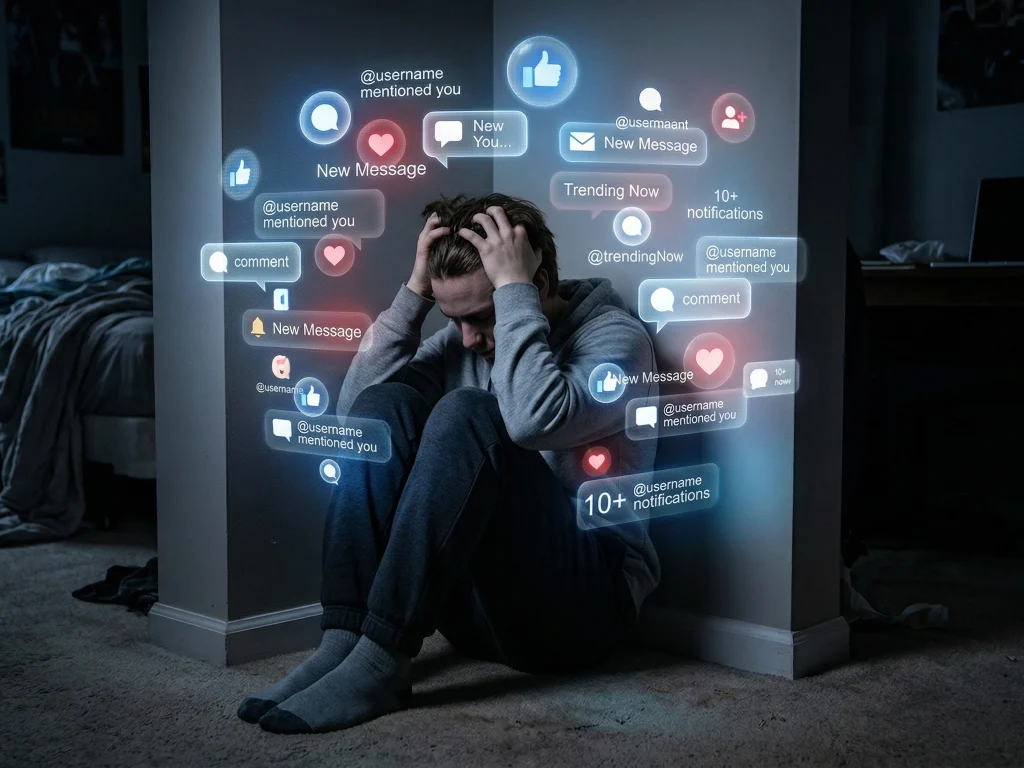
In today’s fast-paced digital world, our phones rarely stay silent for long. Notifications from emails, messaging apps (WhatsApp, iMessage), social media, and work platforms (Teams) constantly demand attention, often within seconds. While technology has improved convenience and connectivity, it has also introduced a hidden cost- known as digital overload.
These constant notifications do more than interrupt your day. They can affect your ability to focus and contribute to stress, burnout, poorer mental health, and reduced work performance.
Understanding the impact of technology on stress is essential for maintaining balance in modern life.
The Rise of Notifications in The Digital World
Over the past decade, the digital world has transformed how we communicate, work, and unwind. Smartphones are no longer just tools but a part of our daily lives.
However, with this convenience comes an unspoken expectation of constant availability. Messages are expected to be answered instantly. Emails continue beyond office hours. Social media notifications pull attention even during rest.
This has been described as continuous partial attention: a state where your focus is never fully on one task. Instead, your mind is constantly anticipating the next interruption.
Over time, this reactive way of living increases cognitive load and reduces mental clarity.
How Notifications Affect the Brain
Each notification triggers a small but significant shift in brain activity.
When your phone lights up, your brain anticipates something new: a message, an update, or new information. This creates a habit loop:
Notification → curiosity → checking → repetition
The more this loop is repeated, the more your brain becomes conditioned to seek constant stimulation.
As a result:
- Silence may feel uncomfortable
- Focus becomes harder to sustain
- The brain struggles to engage in deep work
Research in cognitive psychology shows that after an interruption, it can take several minutes to regain full concentration. Frequent notifications prevent the brain from entering a state of focus, leading to mental fatigue and reduced productivity.
The Mental Health Impact of Constant Notifications
While notifications may seem harmless, their cumulative effect can significantly impact mental well-being.
1. Increased Anxiety and Stress
Frequent alerts create a subconscious feeling that something always needs attention. Even when not actively checking the phone, the brain remains in a state of heightened alertness, waiting for the next interruption.
This “always-on” alertness can contribute to chronic stress and anxiety.
2. Emotional Exhaustion and Burnout
Constant task-switching drains mental energy. Over time, it can contribute to burnout, which is characterised by emotional exhaustion, mental distancing from work, and reduced effectiveness.
You may feel mentally drained, unmotivated, or overwhelmed, even without intense physical exertion.
3. Sleep Disruption
Late-night notifications or the habit of checking phones before bed can disrupt sleep quality. The blue light emitted from screens also interferes with melatonin production in the evening, making it more difficult for some people to fall asleep.
Poor sleep then feeds back into anxiety, irritability, and reduced focus the next day.
4. Reduced Attention Span
One of the most noticeable effects of digital overload is a shortened attention span. Many people find it harder to read long articles, engage in deep conversations, or focus on single tasks without checking their phone.
This fragmentation of attention can affect both personal life and professional performance.
5. Fear of Missing Out (FOMO)
Constant alerts reinforce the idea that something important is always happening elsewhere. This fuels compulsive checking behavior and comparison, which can lower self-esteem and increase dissatisfaction.
Productivity vs. Constant Distraction
Many people believe they are good at multitasking, replying to messages while working, studying, or attending meetings. However, research shows that true multitasking is uncommon for most people.
Instead of doing multiple things simultaneously, the brain rapidly switches between tasks. Each switch reduces efficiency and increases mental load.
This results in:
- More mistakes
- Slower task completion
- Lower-quality output
- Higher stress levels
In workplace environments, constant notifications can significantly reduce deep work time. Even brief interruptions can break creative thinking and problem-solving flow.
Who Is Most Affected by Digital Overload?
While everyone with a smartphone is exposed, some groups are more vulnerable:
Working Professionals
Especially in remote or hybrid setups where boundaries between work and personal life are blurred.
Students
Balancing academic demands with social media exposure increases distraction and stress.
Heavy Social Media Users
Individuals who frequently check Instagram, TikTok, or Facebook often experience higher reward-driven checking behaviour.
Signs You May Be Experiencing Digital Overload
Digital overload can build up gradually. Common signs include:
- Feeling anxious when your phone is not nearby
- Constantly checking notifications without thinking
- Difficulty focusing on one task for long periods
- Feeling mentally tired despite minimal physical activity
- Irritability when interrupted
- Poor sleep quality
Recognising these signs early is important to prevent long-term burnout.
How to Manage Mental Health in a Digital Age
The goal is not to eliminate technology, but to use it intentionally. Small changes can significantly reduce the impact of digital overload.
1. Turn Off Unimportant Notifications
Start by turning off alerts for apps that are not urgent, social media, games, shopping apps, and promotional emails.
Keep only what is necessary.
2. Use Focus or Do Not Disturb Modes
Schedule uninterrupted periods for work, rest, or personal time using “Do Not Disturb” or focus settings.
3. Set Boundaries Between Work and Personal Time
Where possible, avoid responding to non-urgent work messages or emails outside working hours. Setting clear boundaries helps reduce stress, supports recovery, and lowers the risk of burnout.
4. Schedule Phone-Free Time
Designate specific periods in your day where your phone is not in use, such as during meals, before bed, or early morning.
This helps reset attention span and reduces reliance on constant stimulation.
5. Avoid Checking the Phone First Thing in the Morning
Starting the day with notifications immediately puts the brain into reactive mode. Instead, begin with a calm routine, shower, breakfast, or planning your day.
Rebuilding a Healthier Relationship with Technology
Technology offers many benefits, including helping us stay connected with family and friends, access information, learn new skills, and work more efficiently. The goal is not to avoid technology, but to use it in a balanced and intentional way. By becoming more mindful of digital habits, you can:
- Improve focus and productivity
- Reduce stress and anxiety
- Prevent burn out
- Strengthen overall mental well-being
Over time, these habits restore a sense of control, calm, and focus.
When to Seek Professional Support
Sometimes, the most important notification to respond to is your own well-being.
If digital overload is affecting your daily life, sleep, or emotional well-being, you may seek professional help.
At Nobel Psychological Wellness Centre, individuals can receive support for conditions such as anxiety, depression, insomnia, stress-related disorders, and burnout.
Dr. Seng Kok Han, Consultant Psychiatrist at Nobel Medical Group provides personalised care to help patients better understand and manage their mental health.
Seeking help is not a sign of weakness, it is a step towards clarity, balance, and long-term well-being.
Related Doctor

Dr Seng Kok Han
Consultant Psychiatrist MBBS (Singapore), MMED (Psychiatry)Related Clinic

Nobel Psychological Wellness Centre (Ang Mo Kio)


Nobel Psychological Wellness Centre (Novena Medical Centre)