

When Christian Eriksen suddenly collapsed during a football match in June 2026, millions of fans around the world were reminded of a frightening moment they hoped would never happen again.
Five years earlier, Christian Eriksen had suffered a sudden cardiac arrest during Denmark's UEFA Euro 2020 match against Finland, thankfully, Eriksen regained consciousness and received immediate medical attention. The incident once again sparked an important conversation about heart health among athletes. ¹
What happened to Christian Eriksen?
During Denmark's international friendly against Ukraine in June 2026, Christian Eriksen suddenly collapsed on the pitch after appearing to clutch his chest.
Medical staff rushed onto the field immediately, while teammates and opponents signaled for urgent medical assistance.
Fortunately, Eriksen regained consciousness within minutes and was able to leave the field with assistance before being transported to hospital for further assessment.
Cardiac Arrest vs Heart Attack: What's the Difference?
Many people mistakenly believe these two terms mean the same thing.
However, they are not the same.
| Heart Attack 2 | Sudden Cardiac Arrest 23 |
|---|---|
A heart attack occurs when blood flow to part of the heart muscle becomes blocked, often by a blood clot. Although serious, the heart usually continues to beat. A heart attack is a circulation problem. Symptoms often include:
| Sudden cardiac arrest occurs when the heart's electrical system suddenly malfunctions. Instead of pumping blood normally, the heart beats chaotically or stops pumping effectively altogether. Without immediate treatment, the person rapidly becomes unconscious and stops breathing normally. Sudden cardiac arrest is an electrical problem. |
Could this happen to healthy athletes?
Although professional athletes undergo regular medical assessments, some heart disorders can remain difficult to detect. In rare cases, an individual may have no symptoms until a cardiac emergency occurs.
If an athlete experiences concerning symptoms, has a family history of heart disease, or requires further evaluation before returning to sport, a cardiologist may recommend specialised tests to assess the heart's structure, function, and response to exercise. ⁵
How do cardiologists assess heart health in athletes?
Depending on an individual's history, symptoms and sporting activity, cardiologists may recommend further investigations following an initial cardiovascular assessment, in line with expert recommendations for athletes participating in moderate- to high-intensity sports. ⁵
Investigations may include:
1. Echocardiogram
An echocardiogram uses ultrasound to assess the heart's structure and function. It helps identify abnormalities involving the heart muscle, valves, and pumping function.
2. Stress Echocardiography
Some heart conditions can be obvious during physical exertion.
Stress echocardiography evaluates how the heart performs under exercise or medication-induced stress, helping identify exercise-related abnormalities that may not be detected while resting.
3. Cardiopulmonary Exercise Testing (CPET)
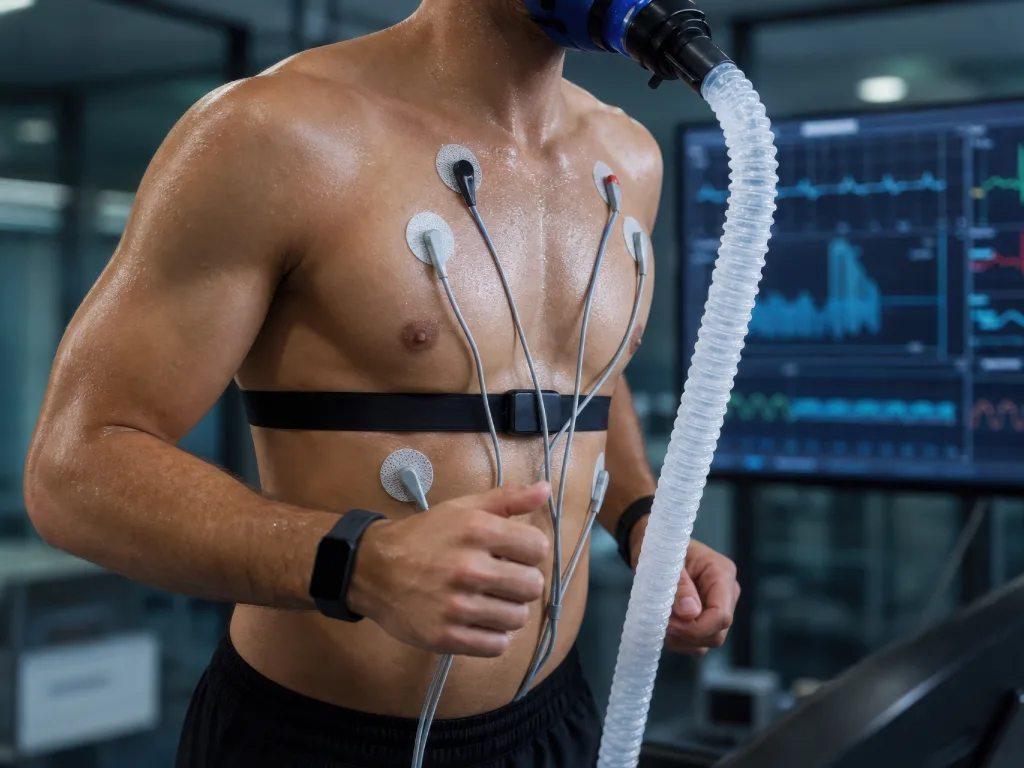
CPET is one of the most comprehensive ways to assess exercise performance because it measures how the heart, lungs, and muscles work together during exercise. One of its key measurements is VO₂ max, which helps cardiologists evaluate exercise capacity and investigate symptoms such as unexplained breathlessness.
Returning to Sports After a Cardiac Event

Christian Eriksen's return to professional football following his 2021 cardiac arrest inspired many around the world. However, returning to sport after a cardiac event is never a simple decision.
Rather than relying on a single test, cardiologists consider multiple factors, including:
- Underlying heart condition
- Cardiac imaging results
- Exercise testing
- Rhythm monitoring
- Physical demands of the sport
Every athlete is different. While some may safely return to competitive activity after appropriate evaluation and treatment, others may need to modify the type or intensity of exercise they perform. ⁵
A personalised assessment helps ensure these decisions balance both performance goals and long-term heart health.
Staying Active Safely
Christian Eriksen's latest on-field collapse reminds us that even elite athletes may require careful cardiac evaluation before returning safely to sport.
For most people, exercise remains one of the best investments in long-term health. The key is knowing when to seek specialist advice and ensuring that your heart is ready for the demands you place upon it.
Although cardiac emergencies in sports are uncommon, but if you've developed symptoms such as chest discomfort, unexplained breathlessness or fainting, or you have a family history of inherited heart disease, it's worth getting checked before pushing yourself harder. Understanding your heart's health can help you exercise with greater confidence and even prevent a life-threatening event.
Dr. Koh Choong Hou, Senior Consultant Cardiologist at Nobel Heart Centre (Mount Elizabeth Novena) sees patients with exercise-related cardiac symptoms and individuals requiring heart screening.
He specializes in cardiac imaging, particularly in echocardiography – this includes stress echocardiography, advanced structural transesophageal echocardiography, and perioperative transesophageal echocardiography. He is also competent in performing and interpreting Cardiopulmonary Exercise Testing (the gold standard investigation for cardiorespiratory fitness).
Reference:
- AP News. Christian Eriksen collapses during Euro 2020 match against Finland. (your existing AP article from 2021)
- Mayo Clinic. Sudden cardiac arrest – Symptoms and causes.
- American Heart Association. Heart Attack and Sudden Cardiac Arrest Differences.
- Cleveland Clinic. Cardiac Imaging: Types, Uses and Procedure Details.
- Wang L, Yeo TJ, Tan JWC, Koh CH, et al. Asian Pacific Society of Cardiology Consensus Recommendations for Pre-participation Screening in Young Competitive Athletes. European Cardiology Review. 2021;16:e44. Available at: https://assets.radcliffecardiology.com/s3fs-public/article-pdf/2021-11/ECR_APSC_Screening_WEB.pdf
Related Doctor

Dr Koh Choong Hou (Koh Junhao)
Senior Consultant Cardiologist MRCP (UK), MBBS, MMed (Int Med), DipAvMed (UK), ASCeXAM (Testamur)
Dr Leow Khang Leng
Consultant Cardiologist MRCP (UK), MBChB (Sheffield)
Dr Saurabh Rastogi
Senior Consultant Interventional Cardiologist MBBS (Maulana Azad Medical College New Delhi, India), American Board of Internal Medicine (ABIM) Diplomate (Interventional Cardiology), ABIM Diplomate (Cardiovascular Disease), ABIM Diplomate (Internal Medicine), Diplomate (Certification Board of Nuclear Cardiology, United States)Related Clinic

Nobel Heart Centre (Gleneagles Hospital)

Nobel Heart Centre (Mount Elizabeth Novena)