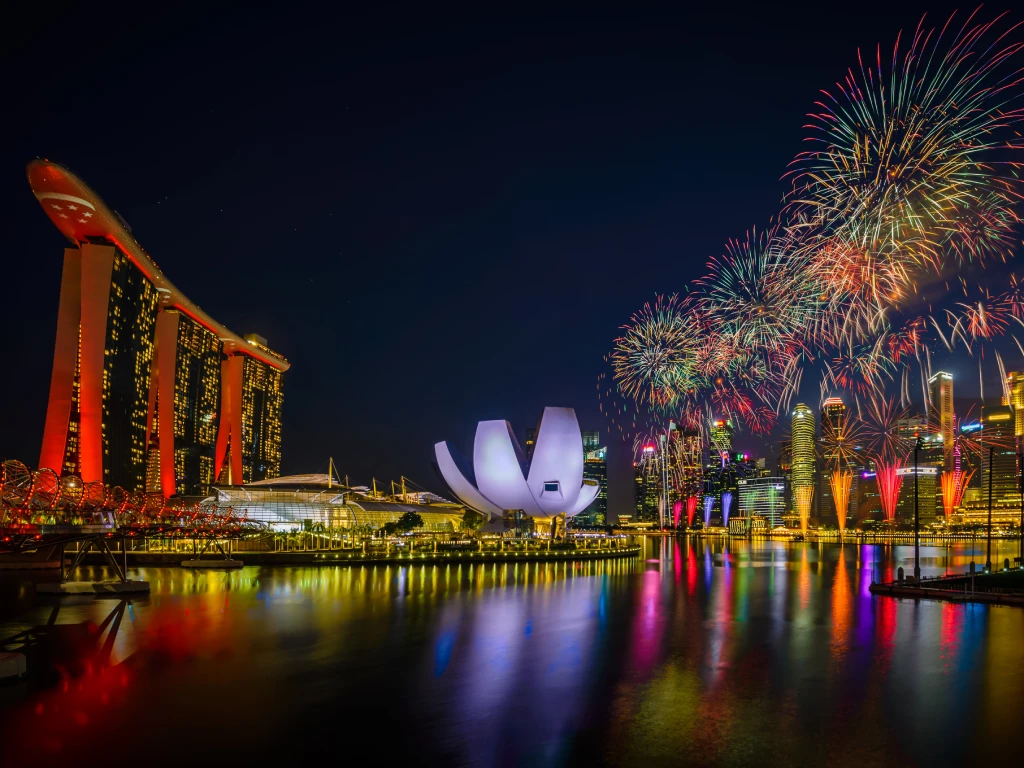
Every year, Singapore Independence Day brings together families and friends to celebrate with spectacular parades, thrilling aerial displays and colourful Singapore National Day fireworks. Whether you're watching the celebrations at Marina Bay Sands or catching the fireworks from a neighbourhood viewing spot, these moments have become a cherished tradition for many Singaporeans.
As breathtaking as the fireworks are, their sudden, booming sounds can sometimes catch you by surprise. Have you ever wondered if these loud bursts of noise could actually affect your hearing?
The good news is that most people can enjoy the celebrations without experiencing lasting hearing problems. However, exposure to very loud sounds, especially at close range or over a prolonged period, may temporarily or, in some cases, permanently affect hearing.
Understanding how loud sounds affect your ears and taking a few simple precautions can help you enjoy the National Day festivities while protecting your hearing.
Why Are Fireworks and Flypasts So Loud?
There's no denying that the thunderous boom of fireworks and the roar of fighter jets are part of what makes Singapore's National Day celebrations so exciting. While these sounds last only a few seconds, they're significantly louder than the everyday noises we're used to hearing.
Fireworks and military aircraft produce what's known as impulse noise, a sudden burst of extremely loud sound. Unlike the steady hum of traffic or conversation, impulse noise releases a large amount of sound energy almost instantly. This can temporarily overwhelm the delicate structures inside your inner ear.
Inside the cochlea are thousands of tiny sensory hair cells that convert sound vibrations into signals your brain recognises as sound. These hair cells are incredibly sensitive and once damaged, they do not regenerate.
While spectators are usually positioned at safe viewing distances, standing very close to loudspeakers, fireworks launch zones or aircraft flight paths may expose you to higher sound levels.
"Temporary ringing in the ears after exposure to loud noise is a sign that your ears have been stressed. While it often improves, persistent hearing changes or tinnitus should not be ignored”- Dr Leong Hoo Kwong, Senior Consultant ENT Surgeon at Nobel ENT Centre.
How Loud Is Too Loud?
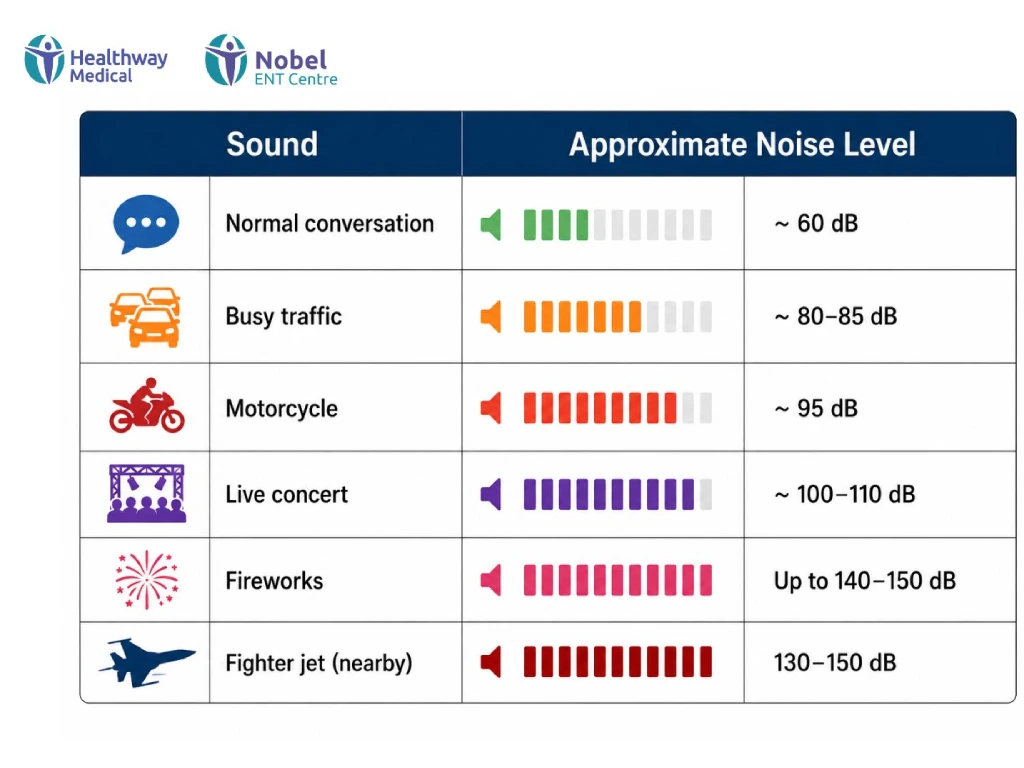
It's often difficult to judge whether a sound is "too loud." One useful way to put things into perspective is by comparing fireworks with everyday sounds we hear regularly.
As a general guide, prolonged exposure to sounds above 85 dB may gradually increase the risk of hearing damage. The louder the sound, the less time it takes before your ears can be affected.
Can Singapore National Day Fireworks Damage Your Hearing?
One evening is unlikely to cause permanent hearing loss.
If you're watching the Singapore National Day fireworks from an official viewing area, a single evening is unlikely to result in permanent hearing loss. However, everyone's ears respond differently to loud sounds.
Your risk becomes higher if you're standing very close to the fireworks launch area, spending several hours next to loudspeakers, attending multiple noisy events over a short period, or not wearing hearing protection when appropriate.
Most people won't experience any lasting effects after watching the fireworks. However, it's not unusual to notice a temporary ringing in the ears or that sounds seem slightly muffled after being exposed to very loud noise. These symptoms usually improve within a few hours as your ears recover.
If they persist beyond 24 to 48 hours, it's advisable to seek medical assessment, as prolonged symptoms could indicate more significant noise-related injury.
Who Is More Vulnerable to Loud Noise?
While everyone should protect their hearing, some individuals are more susceptible to loud sound exposure.
1. Young Children
Young children are often the first to cover their ears when fireworks begin and for good reason. Their hearing is still developing, making them more sensitive to loud sounds than adults.
Babies and toddlers also can't always tell you when something is painfully loud. If they become distressed, start crying or repeatedly cover their ears, it may be a sign that the noise is overwhelming them.
Parents should pay particular attention to keeping children a safe distance from speakers and fireworks displays.
2. Older Adults
Many older adults already have some degree of age-related hearing loss. Additional exposure to loud noise may further affect hearing or worsen existing difficulties understanding speech, particularly in noisy environments.
3. People with Existing Hearing Conditions
Extra care should also be taken to individuals who have:
- Hearing aids
- Tinnitus
- Previous ear surgery
- Chronic ear infections
- Existing hearing loss
- Inner ear disorders
Simple Tips to Protect Your Hearing During National Day
The good news is that you don't have to skip the celebrations to look after your hearing. A few simple habits can make a noticeable difference.
1. Keep Your Distance
The closer you are to fireworks, speakers or aircraft, the louder the sound.
Choosing a viewing area further away naturally reduces noise exposure while still offering an enjoyable experience.
2. Bring Hearing Protection
If you know you'll be close to the action or are sensitive to loud noises, it's a good idea to bring hearing protection. Earplugs aren't just for concerts, they're equally useful during fireworks displays, air shows and other noisy outdoor events.
For adults, reusable earplugs can help lower the volume without taking away from the experience. Babies and young children should wear properly fitted earmuffs or ear defenders, which are designed to protect their more sensitive hearing.
A simple pair of hearing protectors can make the celebrations more comfortable while helping to reduce the risk of noise-related hearing damage.
3. Give Your Ears Time to Recover
Try to avoid immediately listening to loud music through headphones during your journey home. Your ears have already been exposed to a lot of sound, and a quiet environment gives them the opportunity to recover.
4. Teach Children About Loud Sounds
Encourage children to:
- Cover their ears if sounds become uncomfortable
- Tell an adult if their ears hurt
- Wear hearing protection when appropriate
Helping children build healthy hearing habits early can benefit them for years to come.
When Should You See an ENT Specialist?
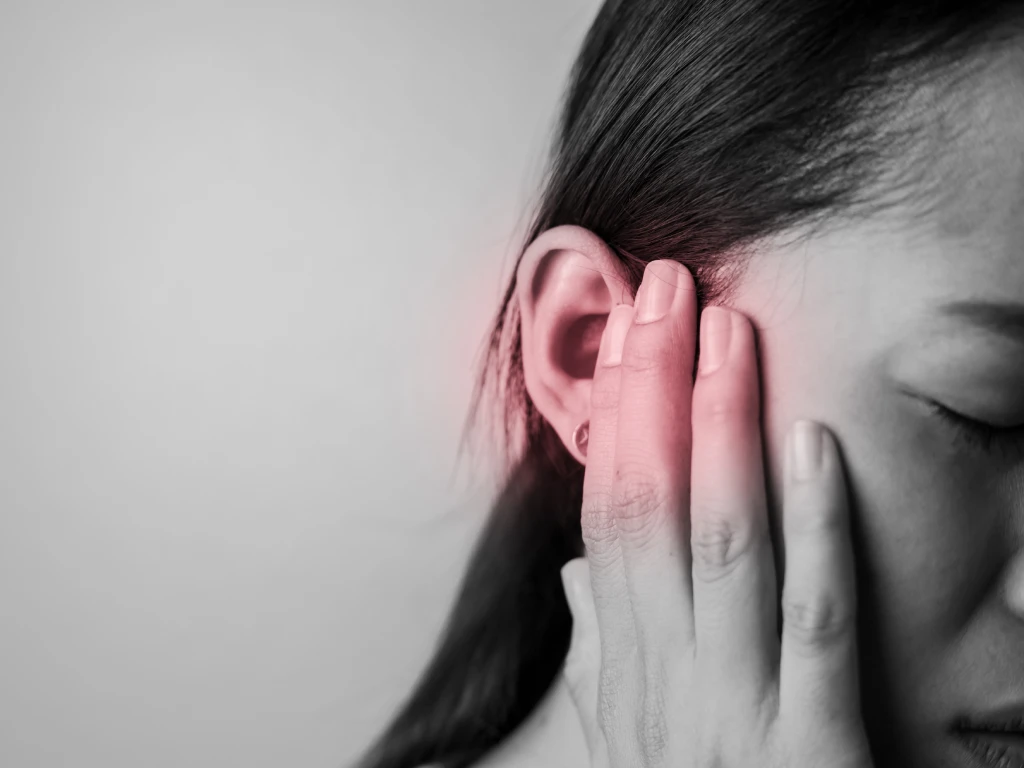
While temporary symptoms often improve on their own, arrange an assessment if you experience:
- Ringing in the ears lasting longer than 24–48 hours
- Sudden hearing loss
- Persistent muffled hearing
- Ear pain
- Dizziness or balance problems
- Ear fullness that doesn't improve
- Ear discharge
- Symptoms affecting only one ear
Early evaluation can help determine whether hearing has been affected and whether further treatment is needed.
Protect Your Hearing While Enjoying the Celebrations
Whether you're planning to catch the Singapore National Day fireworks or attending other festive events throughout the year, there's no reason to miss out on these events. By keeping a safe distance from loud sound sources, using hearing protection when appropriate and giving your ears time to recover afterwards, you can enjoy the celebrations while reducing the risk of hearing damage.
If you notice persistent ringing in the ears (tinnitus), hearing loss, ear pain, dizziness or a feeling of blocked ears that doesn't improve after the event, it's important not to ignore these symptoms. While temporary changes in hearing often resolve on their own, persistent symptoms may be a sign of underlying hearing damage and should be assessed promptly.
At Nobel ENT Centre, Dr. Leong Hoo Kwong (Senior Consultant ENT Surgeon) has a special interest in otology and neuro-otology, which focuses on conditions affecting the ear, hearing and balance. If you're experiencing ongoing hearing changes, he can provide comprehensive evaluation and provide appropriate advice and treatment at Gleneagles hospital.
Frequently Asked Questions
Can Fireworks Cause Permanent Hearing Loss?
They can, particularly if you're very close to the source or repeatedly exposed without hearing protection. Most spectators watching from designated viewing areas are at a much lower risk.
Should Babies Wear Hearing Protection During Fireworks?
Yes. Babies and young children should wear properly fitted earmuffs or ear defenders when attending loud outdoor events.
What Does Ringing in the Ears Sound Like?
People experience it differently. It may sound like ringing, buzzing, humming, roaring, whistling, or even clicking. Some people hear it only in quiet environments, while others notice it constantly.
What Should You Do If You Notice Ringing in Your Ears?
A brief period of ringing is relatively common after loud noise exposure. However, if it persists beyond 24 to 48 hours or is accompanied by hearing loss or dizziness, you should seek medical assessment.
Can Hearing Loss from Loud Noise Be Reversed?
Temporary hearing changes may improve as the ears recover. However, permanent damage to the inner ear's sensory hair cells cannot currently be reversed, which is why prevention is so important.
Related Doctor

Dr Annette Ang Hui Chi
Senior Consultant Ear, Nose and Throat MBBS (Singapore), MRCS (Edinburgh), MMed (ORL), FAMS (ENT)
Dr Fung Chak Yuen
Senior Consultant Ear, Nose and Throat MBBS (Singapore), FAMS (Singapore), MRCSI (Ireland), MMed (Otolaryngology, Singapore)
Dr Leong Hoo Kwong
Senior Consultant Ear, Nose and Throat Surgeon FRCS (Glasgow), MBBS (Singapore), FAMS (ORL) (Singapore), FICS (USA), FAAO (USA)Related Clinic

Nobel ENT Centre (Gleneagles)

Nobel ENT Centre (Mount Alvernia)