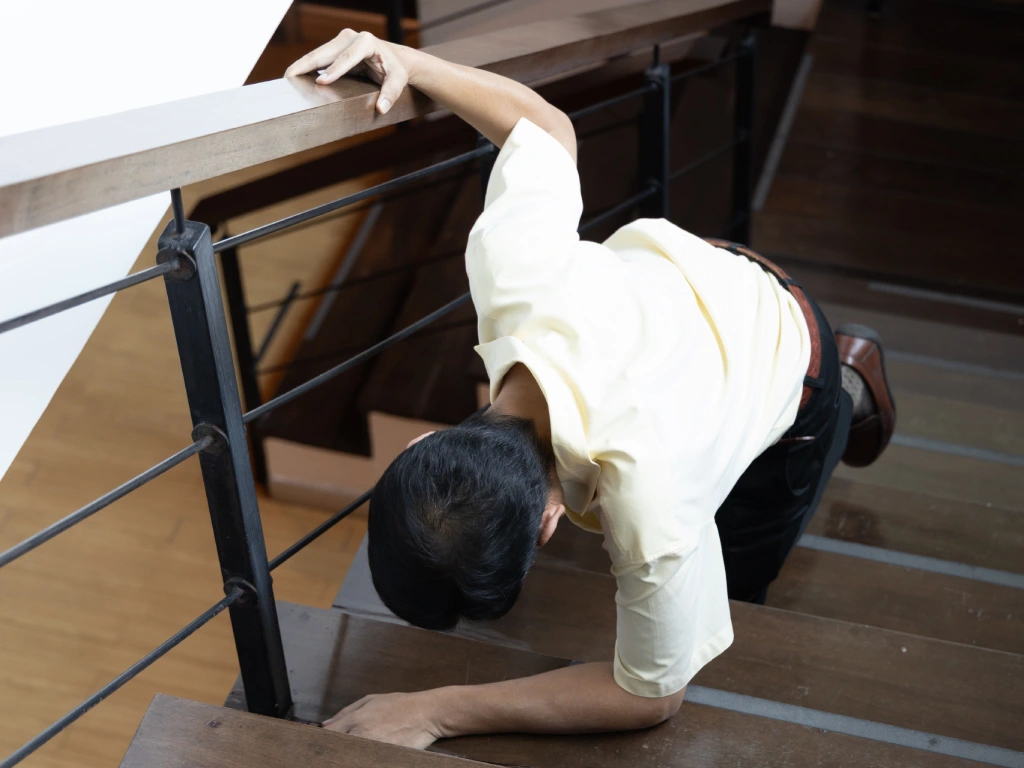
You climb a flight of stairs and suddenly find yourself breathing heavily. Your chest feels tight, your heart races, and you need a moment before continuing.
Many people brush this off with thoughts like. “I'm just getting older” or “I'm probably out of shape.” While occasional breathlessness can be normal, feeling out of breath due to climbing stairs too often may sometimes point to more than just low fitness levels.
And sometimes, that’s true.
But if this keeps happening more often than it used to, your body might be trying to tell you something worth paying attention to.
Is It Normal to Feel Breathless After Climbing Stairs?
A little breathlessness after climbing stairs is completely normal, especially if you’ve been inactive, rushed up quickly, or are carrying something heavy.
When you climb stairs, your body suddenly needs more oxygen. To keep up, a few things happen at once:
- Your heart pumps faster to circulate oxygen-rich blood
- Your lungs work harder to take in more oxygen
- Your breathing rate increases temporarily
Most healthy people recover within a short period once they stop moving.
However, there is a difference between mild exertion and frequent or excessive breathlessness symptoms. If you find yourself unusually winded after just one or two flights, it may be worth looking a little deeper.
Why Stairs Are a Real-Life Fitness Test
Unlike walking on flat ground, stairs require your body to work against gravity.
That sudden increase in effort puts immediate pressure on your:
- Heart
- Lungs
- Muscles
- Circulation
That’s why even a short staircase can feel intense.
In fact, doctors often pay attention when patients mention getting breathless on stairs, because it can reveal early changes in fitness or cardiovascular health that might not show up during normal daily activities.
What Breathlessness Could Mean for Your Heart
Not all breathlessness is linked to heart disease. Sometimes, it may simply reflect poor fitness, weight gain, stress, or lack of regular exercise.
But when the heart isn’t pumping efficiently, the body struggles to deliver oxygen where it’s needed. As a result, even simple activities — like climbing stairs — can feel unexpectedly difficult.
You may want to pay closer attention if you notice:
- Getting out of breath after minimal effort
- Needing to stop midway on stairs
- A racing or irregular heartbeat
- Chest tightness or discomfort
- Dizziness or lightheadedness
- Taking longer than usual to recover
- Feeling unusually fatigued after small activities
These symptoms do not always mean there is a serious problem, but if they’re happening more often, they shouldn’t be ignored.
How Modern Lifestyle Habits Play a Role
Modern lifestyles have quietly reduced the amount of natural movement in our daily routines. Many people spend long hours sitting at desks, driving, or looking at screens.
At the same time, lifts, escalators, food delivery services, and remote work have made everyday life more convenient but less physically active.
Over time, this can lead to deconditioning, where the heart and lungs become less efficient. When that happens, even moderate activities like climbing stairs start to feel harder than they should.
When It Might Be More Than Just Fitness
Although occasional breathlessness can be harmless, certain symptoms may suggest that medical evaluation is needed.
You should consider seeing a doctor if you experience:
- Breathlessness that worsens over time
- Chest pain or pressure
- Swelling in the legs or ankles
- Shortness of breath even at rest
- Feeling faint or dizzy during activity
- Persistent fatigue
- Irregular or fast heartbeat
- Breathlessness that interferes with daily life
People with risk factors such as high blood pressure, diabetes, high cholesterol, obesity, smoking history, or family history of heart disease should be especially mindful of these symptoms.
How to Support Your Heart Health (Lifestyle Focus)
The good news is that small, consistent changes can make a real difference over time.

1. Stay active
Regular movement helps strengthen the heart and improve circulation. Even brisk walking, light jogging, cycling, or swimming several times a week can help build stamina gradually.
2. Prioritise hearth healthy eating
A balanced diet rich in vegetables, fruits, lean proteins, whole grains, and healthy fats support overall cardiovascular health.
3. Manage stress levels
Chronic stress may affect blood pressure, sleep quality, and heart health. Finding healthy ways to manage stress can help reduce long term strain on the body.
4. Go for regular health screening
Conditions like high blood pressure or high cholesterol often develop quietly. Early detection allows you to act before complications arise.
When Should You See a Doctor?
If feeling out of breath when climbing stairs has become more noticeable, frequent, or disruptive, it may be worth getting checked.
A doctor may assess your symptoms, lifestyle habits, medical history, and cardiovascular risk factors to better understand what could be contributing to the problem.
The goal is not simply to diagnose illness, but to identify potential risks early and support long term heart health before more problems arise.
Listen to Your Body
Feeling breathless once in a while is normal. However, when everyday activities such as climbing stairs consistently leave you struggling to catch your breath, your body may be asking for attention.
At Nobel Heart Centre, our specialists, provide comprehensive heart health assessments and cardiovascular care tailored to your needs. Early evaluation can help identify potential concerns before they progress further.
Related Doctor

Dr Koh Choong Hou (Koh Junhao)
Senior Consultant Cardiologist MRCP (UK), MBBS, MMed (Int Med), DipAvMed (UK), ASCeXAM (Testamur)
Dr Leow Khang Leng
Consultant Cardiologist MRCP (UK), MBChB (Sheffield)
Dr Saurabh Rastogi
Senior Consultant Interventional Cardiologist MBBS (Maulana Azad Medical College New Delhi, India), American Board of Internal Medicine (ABIM) Diplomate (Interventional Cardiology), ABIM Diplomate (Cardiovascular Disease), ABIM Diplomate (Internal Medicine), Diplomate (Certification Board of Nuclear Cardiology, United States)Related Clinic

Nobel Heart Centre (Mount Elizabeth Novena)

Nobel Heart Centre (Gleneagles Hospital)