

A prolactinoma is usually a non-cancerous or benign tumour of the pituitary gland that produces excess prolactin, a hormone primarily responsible for stimulating breast development and milk production. The pituitary gland also produces hormones that regulate important functions such as growth, reproduction, and thyroid activity.
Prolactinomas develop when prolactin-producing cells in the pituitary gland grow abnormally, resulting in elevated prolactin levels, a condition known as hyperprolactinemia. They are among the most common types of hormone-producing pituitary tumours.
Excess prolactin can interfere with the body's sex hormones, potentially causing irregular or missed periods, difficulty getting pregnant, reduced sex drive or erectile dysfunction. Larger prolactinomas may press on nearby structures, leading to headaches or changes in vision.
The good news is that prolactinomas can often be managed with medication, which can lower prolactin levels, shrink the tumour and improve symptoms.
What Are the Symptoms of Prolactinoma?
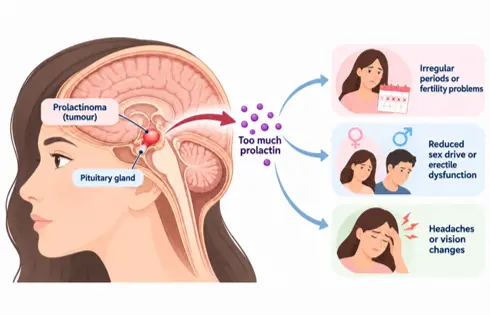
Some small prolactinomas cause no noticeable symptoms.
When symptoms occur, they usually happen for one of two reasons:
- High prolactin levels affect hormones involved in periods, fertility and sexual function.
- A larger tumour presses on nearby areas, including the nerves involved in vision.
Therefore, women and men can experience different Prolactinoma symptoms.
| Prolactinoma Symptoms in Women | Prolactinoma Symptoms in Men |
|---|---|
|
|
What Causes a Prolactinoma?
For most people, the exact cause of prolactinoma is unknown. A prolactinoma develops when prolactin-producing cells in the pituitary gland grow and form a tumour. Why this happens is not fully understood.
Most prolactinomas are not caused by an inherited condition. In rare instances, prolactinomas may occur as part of an inherited condition affecting hormone-producing glands, such as multiple endocrine neoplasia type 1, also known as MEN1.
It is also important to note that not all cases of high prolactin levels are caused by a prolactinoma. Certain medications, an underactive thyroid gland, pregnancy and breastfeeding, and some kidney conditions can also increase prolactin levels.
If blood tests show elevated prolactin, a doctor may recommend further assessment to determine the underlying cause and whether additional investigations, such as an MRI of the pituitary gland, are needed.
What Does Prolactin Do?
Prolactin is best known for helping the breasts produce milk during pregnancy and breastfeeding. However, prolactin can also influence the reproductive system.
When prolactin levels stay too high, they can interfere with the hormones that control the ovaries and testes. This may lower levels of oestrogen in women and testosterone in men.
Over time, this can affect:
- Menstrual periods
- Ovulation
- Fertility
- Sexual function
- Sex drive
- Bone strength
This is why prolactinoma can cause symptoms such as irregular periods, reduced sex drive and fertility challenges even though the tumour is located in the pituitary gland.
What Are the Types of Prolactinoma?
Prolactinomas are commonly grouped according to their size.
Microprolactinoma
A microprolactinoma measures less than 1 cm across. These tumours are less likely to press on nearby structures. Symptoms are usually caused by high prolactin levels rather than the pressure from the tumour itself.
Macroprolactinoma
A macroprolactinoma measures 1 cm or more across. Because the pituitary gland is located close to the optic nerves, a larger tumour may press on these nerves and affect vision. This can cause headaches or changes in vision.
A large tumour may also affect the healthy part of the pituitary gland, which can reduce the production of other important hormones.
How Is a Prolactinoma Diagnosed?
Your doctor may recommend the following investigations to identify the cause:
- Blood tests: Measure prolactin levels and assess other relevant hormones. Depending on the findings, tests may also help rule out causes such as underactive thyroid or medication-related effects.
- MRI of the pituitary gland: If a prolactinoma is suspected, an MRI may be used to identify a tumour and assess its size and location.
- Vision assessment: If the tumour is large or close to the optic nerves, formal visual field testing may be recommended.
Is Surgery Needed for Prolactinoma?
Most prolactinomas do not require surgery.
Surgery may be considered when:
- Medication does not adequately control the prolactinoma
- Side effects prevent you from taking the medication
- The tumour continues to grow despite treatment
- The tumour presses on the optic nerves and affects vision
The most common procedure to remove prolactinomas is transsphenoidal surgery. During the procedure, the surgeon accesses the pituitary gland through the nose and removes as much of the tumour as safely possible.
Successful removal of a prolactinoma tumour depends on its size, location, and whether it has grown into nearby tissues.
Surgery is considered an appropriate treatment option after discussion with a specialist. At Nobel Medical Singapore, our endocrinologists, Dr Nitish Mishra and Dr Tng Eng Loon, can assess your condition and discuss a suitable treatment plan.
What Happens If a Prolactinoma Is Left Untreated?
The effects of an untreated prolactinoma depend on the size of the tumour, prolactin levels, and whether symptoms are present. While some small prolactinomas may remain stable, others can cause ongoing hormonal problems or grow over time.
Persistently high prolactin may lead to:
- Ongoing menstrual problems
- Low testosterone
- Reduced sex drive
- Sexual dysfunction
- Fertility problems
- Loss of bone density
A large tumour may continue to grow and press on the optic nerves or healthy pituitary tissue. This may affect:
- Vision
- The production of other pituitary hormones

When Should You See a Doctor?
Consider seeing a doctor if you experience symptoms such as:
- Menstrual periods becoming irregular or stopping without a clear reason
- Milky nipple discharge unassociated with pregnancy or breastfeeding
- Persistent reduced sex drive
- Erectile dysfunction
- Difficulties getting pregnant
- Persistent headaches together with other hormone-related symptoms
- Difficulties with peripheral vision
These symptoms can have many causes other than prolactinoma. An endocrinologist can help assess your symptoms and decide whether further assessments such as a prolactin blood test, hormone profile tests or even an MRI scan of the pituitary gland are required.
Book an AppointmentFrequently Asked Questions (FAQ)
Prolactinomas form in the pituitary gland, which sits at the base of the brain. Although the pituitary gland is connected to the brain, it is part of the endocrine system. Therefore, “pituitary tumour” is usually a more accurate term for describing a prolactinoma.
Physical stress can temporally raise prolactin. This does not mean stress causes prolactinoma. A doctor may repeat a prolactin test or investigate further if prolactin levels remain elevated.
Yes. Prolactin levels may increase after treatment is stopped, even after a period of normal results. Medication should only be reduced or stopped under medical direction, and follow-up blood tests will still be required.
Presently, most prolactinomas cannot be prevented as their exact causes are unknown. Recognising symptoms and seeking medical advice early can help identify the condition before a larger tumour causes problems, such as changes in vision.